Source of Funds Documentation UAE: Finance Team Guide
M Maria August 22, 2026 16 min read
Do you know where a customer’s money actually comes from, and can you prove it with reliable documents if someone asks?
For finance teams, processing a payment is often more than checking whether the amount and account details are correct. In certain situations, businesses also need to understand the source of funds behind a transaction. This becomes particularly important when a transaction is unusually large, does not match the customer’s normal activity, involves third-party funding, or presents other risk indicators.
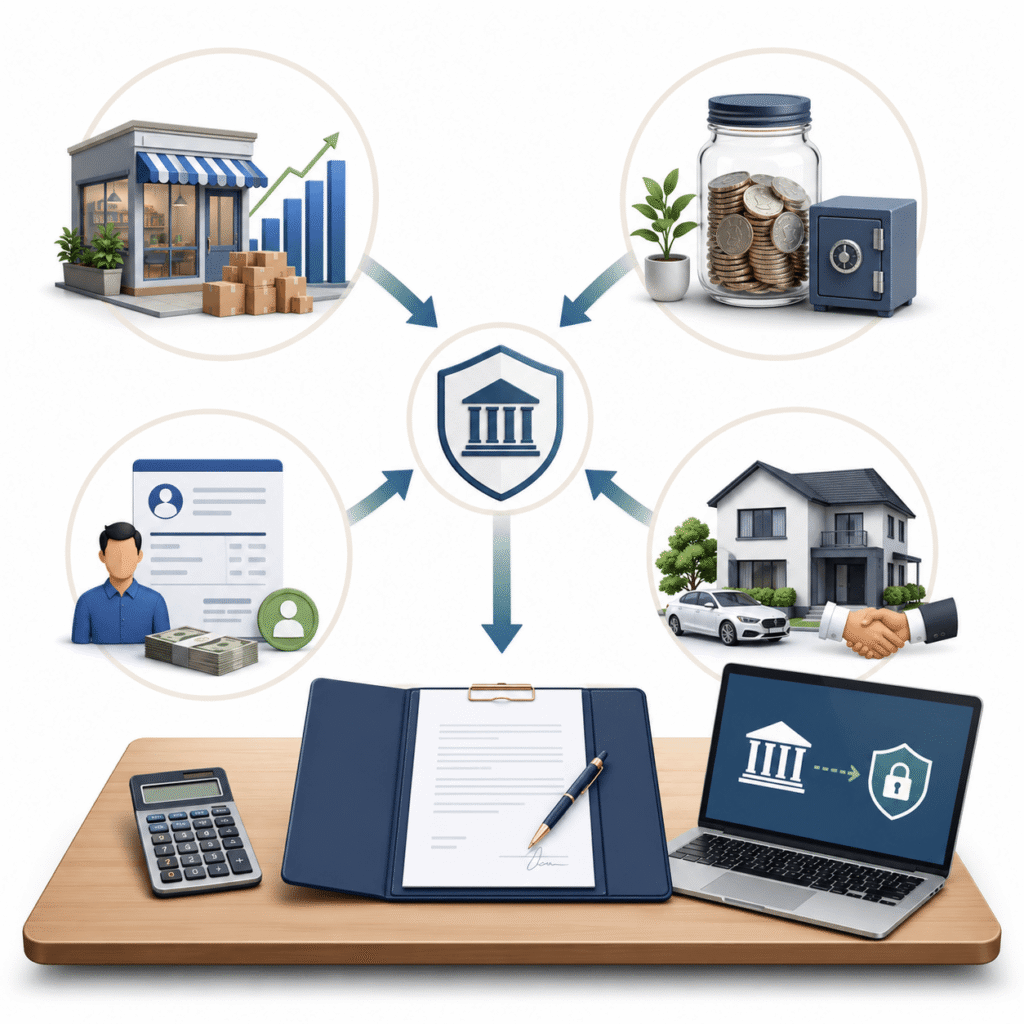
Source of funds documentation UAE businesses maintain can help explain where the specific money used in a transaction came from and provide evidence to support that explanation. It is an important part of a risk-based approach to customer due diligence and anti-money laundering (AML) controls.
What is the source of funds?
Source of Funds (SoF) refers to where the specific money being used in a transaction or business relationship comes from. In simple terms, it answers the question:
“Where did this particular money come from?”
For example, suppose a customer transfers AED 500,000 to purchase an asset. The source of those funds could be:
Salary or employment income
Business income
Sale of property
Sale of shares or investments
Bank loan
Inheritance
Dividends
Other legitimate financial sources
The purpose of source of funds verification UAE businesses conduct is not simply to ask a customer where the money came from. Depending on the circumstances and risk level, the business may also need appropriate evidence that supports the customer’s explanation.
For example, if a customer says that AED 500,000 came from the sale of a property, relevant documents might include a property sale agreement and bank records showing receipt of the proceeds.
The exact evidence required will depend on the circumstances. There is no single document that proves the source of funds in every situation.
Source of Funds vs Source of Wealth: What Is the Difference?
One of the most important concepts for finance teams is understanding the difference between source of funds and source of wealth.
What is the source of funds?
Source of funds concerns the origin of the specific money involved in a particular transaction. For example:
A customer transfers AED 300,000 from the proceeds of a property sale. The source of funds is the property sale proceeds.
What is the source of wealth?
Source of wealth (SoW) refers to how a customer accumulated their overall wealth over time. For example, a customer’s overall wealth may have been built through:
Business ownership
Employment
Investments
Property
Inheritance
Other legitimate sources
The UAE Central Bank distinguishes between these two concepts and explains that the source of funds relates to the direct source of money used for an account or transaction, while the source of wealth concerns the sources that generated or significantly contributed to the customer’s overall wealth.
Simple Example of SoF vs SoW
Imagine a business owner who has accumulated substantial wealth through operating companies and property investments. The person sells a property for AED 2 million and uses AED 500,000 from that sale for a new transaction.
In this case:
Source of wealth: Business ownership and property investments
Source of funds: Proceeds from the property sale
This distinction helps finance teams understand what information they are actually trying to establish.
Why Is Source of Funds Documentation UAE Important?
Source of funds documentation can help a business understand and support the financial activity of its customers. It can be particularly relevant to:
Customer due diligence
AML compliance
Risk assessment
Transaction monitoring
Enhanced due diligence
Identifying unusual activity
Supporting internal reviews
Maintaining an appropriate audit trail
The UAE’s AML framework uses a risk-based approach. This means businesses should consider the nature and level of risk associated with customers, transactions, and business relationships rather than applying exactly the same level of review in every case.
For example, a routine transaction that is completely consistent with a customer’s known activity may require less investigation than a large, unexpected transaction involving an unfamiliar third party.
The UAE Central Bank’s guidance states that regulated institutions should obtain sufficient information to understand the customer’s source of funds and source of wealth where required by risk, and that higher-risk situations may require additional evidence and corroboration.
Therefore, source of funds documentation should not be viewed simply as paperwork. It is part of a broader process of understanding whether financial activity is consistent with the customer’s profile and circumstances.
When Should Finance Teams Request Source of Funds Documentation?
There is no universal rule that every customer must provide the same documents for every transaction. The need for proof of the source of funds UAE businesses request should depend on the circumstances and applicable requirements. Here are situations where additional information may be appropriate.
1. A Transaction Is Unusually Large
A transaction that is significantly larger than the customer’s usual activity may require additional attention. For example, a customer who normally makes payments of AED 10,000 suddenly transfers AED 1 million. The amount alone does not mean the transaction is suspicious. The finance team should consider:
Why is the payment being made?
What is the source of the money?
Does the transaction match the customer’s business?
Is supporting documentation available?
2. Activity Does Not Match the Customer Profile
Suppose a customer has historically reported modest local business activity but suddenly receives substantial international payments. The change may have a legitimate explanation. However, the finance team may need to understand whether the customer’s circumstances or business activities have changed.
3. The Customer Is Higher Risk
Higher-risk customers or relationships may require enhanced due diligence. This may involve obtaining more detailed information and stronger supporting evidence concerning the customer’s source of funds or wealth.
4. A Third Party Provides the Funds
Third-party funding can require closer attention when the relationship between the customer and the funding party is unclear. For example, a customer is expected to make a payment, but the funds arrive from an unrelated company. The business may need to understand:
Who provided the money?
Why did they provide it?
What is their relationship with the customer?
Is there a legitimate reason for the arrangement?
5. The Source of Funds Is Unclear
A customer may provide a general explanation such as:
“The funds are from my savings.”
Depending on the circumstances, this may not provide enough information to understand the origin of the specific funds. Additional evidence may therefore be appropriate.
6. Transaction Activity Changes Suddenly
Changes in:
Transaction values
Payment frequency
Countries involved
Counterparties
Payment methods
May require review when they are inconsistent with the customer’s known activity.
What Documents Can Prove Source of Funds?
The appropriate source of funds documents UAE businesses request will depend on how the money was obtained. The goal is not to collect every possible document. Instead, the evidence should reasonably support the customer’s explanation.
1. Salary or Employment Income
If the funds came from employment, possible evidence may include:
Salary slips
Employment contract
Bank statements
Other relevant employment records
For example, a bank statement may show regular salary deposits that correspond with the customer’s explanation.
2. Business Income
If the money came from business activities, supporting evidence may include:
Business bank statements
Financial statements
Invoices
Company accounts
Audited financial statements, where applicable
The exact evidence depends on the business and transaction.
3. Property Sale
If funds came from selling property, possible documents include:
Property sale agreement
Property transfer documents
Bank statements showing receipt of proceeds
Other relevant transaction records
The purpose is to establish a reasonable connection between the property sale and the funds being used.
4. Investment Proceeds
Investment-related funds may be supported by:
Investment statements
Brokerage statements
Sale confirmations
Bank statements
For example, if a customer states that funds came from selling investments, documentation should reasonably support that explanation.
5. Sale of Shares or a Business
Possible evidence may include:
Share sale agreement
Company records
Transaction completion documents
Bank statements
6. Loan Proceeds
Where money comes from a loan, relevant evidence may include:
Loan agreement
Bank statement showing receipt
Lender documentation
Other relevant financing records
7. Inheritance
Inheritance-related funds may be supported by:
Probate documents
Inheritance documentation
Court documents
Bank records
8. Dividend Income
Possible evidence includes:
Dividend statements
Company records
Bank statements
Relevant financial documents
The important principle is consistency. The documents should reasonably support the customer’s explanation and connect the stated source to the actual funds.
How Should Finance Teams Verify the Source of Funds?
Collecting documents is only one part of the process. Finance teams should also understand what those documents demonstrate.
Step 1: Understand the Transaction
Start with the basic facts:
What is the transaction?
How much money is involved?
Who are the parties?
What is the purpose?
When did it occur?
Step 2: Ask Where the Funds Came From
Obtain a clear explanation of the claimed source of funds. The explanation should be specific enough to understand the origin of the money.
Step 3: Request Supporting Documents
Choose documents appropriate to the stated source and risk level. For example, property sale proceeds may require different evidence from salary income.
Step 4: Compare the Evidence With the Transaction
Check whether:
Names match
Amounts are reasonable
Dates make sense
Parties are consistent
The documents support the explanation
If a customer says the funds came from a property sale but the supporting documents show a different amount or unrelated parties, the discrepancy may require clarification.
Step 5: Conduct Independent Verification Where Appropriate
For higher-risk situations, simply accepting a customer’s statement may not be sufficient. Independent or additional verification may help confirm that the stated source is genuine and consistent with available information.
Step 6: Assess the Overall Risk
Consider:
Customer risk
Transaction risk
Geographic risk
Business activity
Source of funds
Source of wealth, where relevant
Transaction history
Step 7: Document the Decision
Record what was reviewed, what evidence was received, and how the final conclusion was reached.
Source of Funds Red Flags Finance Teams Should Watch For
A source of funds red flag does not automatically mean that funds are illegal. Instead, it indicates that additional questions or investigation may be appropriate.
Vague or Unsupported Explanation: A customer provides a general explanation but cannot reasonably support it with evidence.
Third-Party Funding: Money is provided by another person or company without a clear commercial or personal explanation.
Multiple Unexplained Funding Accounts: Funds originate from several accounts without an obvious reason.
Sudden Large Increase in Funds: A customer’s financial activity suddenly increases far beyond their previous pattern.
Funding Inconsistent With Customer Profile: The source of funds appears inconsistent with known income, business activity, or financial circumstances.
High-Risk Geographic Connections: Funds may originate from or pass through jurisdictions that require increased risk attention.
Unusual Cash Funding: Large or repeated cash transactions that do not fit the customer’s expected activity may require closer review.
Documents Do Not Match the Transaction: For example:
Different names
Different amounts
Conflicting dates
Missing information
Inconsistent explanations
Unnecessarily Complex Funding Structure: Several companies, intermediaries, or accounts are used without a clear reason.
The UAE Central Bank’s guidance identifies several situations that may warrant additional scrutiny, including unexplained third-party funding, multiple funding accounts without a clear purpose, and discrepancies between the stated source of funds and available evidence.
How to Assess Whether the Source of Funds Evidence Is Reliable
Finance teams should not simply ask, “Did we receive a document?”
A better approach is to ask whether the document actually supports the explanation. Consider these questions:
Does the document identify the source?
A bank statement should show relevant financial activity rather than simply showing that money exists.
Does the amount make sense?
The evidence should reasonably explain the amount being used.
Do the dates make sense?
The timing of the source and transaction should be consistent.
Do the parties match?
Names and relationships should not create unexplained inconsistencies.
Is the evidence reliable?
Consider whether the document appears complete and credible.
Does the evidence support the customer’s explanation?
The final assessment should consider the evidence as a whole.
What Should Finance Teams Do If Documents Are Incomplete?
Sometimes a customer may provide only part of the requested information. The appropriate response is not necessarily to reject the transaction immediately.
Ask for Clarification: Give the customer an opportunity to explain missing information or inconsistencies.
Request Additional Evidence: If the original document does not adequately establish the source, additional evidence may be needed.
Compare With Existing Customer Information: Check whether the explanation is consistent with the customer’s existing profile.
Escalate When Necessary: If significant concerns remain unresolved, follow the organization’s internal AML escalation procedures.
Document the Outcome: Record:
What was requested
What was received
What was missing
What explanation was provided
What decision was reached
This creates a clear record of the review.
Source of Funds Documentation for Higher-Risk Customers
Higher-risk relationships may require enhanced due diligence (EDD). In such cases, businesses may need to obtain more detailed information about the customer’s financial circumstances and the origin of funds or wealth. Enhanced review may include:
Additional supporting documents
Stronger evidence
Independent verification
More detailed transaction analysis
Closer ongoing monitoring
However, higher risk does not mean the customer has done anything wrong. It simply means that the relationship may require stronger controls because of the level or nature of the identified risk. The depth of verification should be proportionate to the circumstances.
How Finance Teams Should Document a Source of Funds Review
A good source of funds review should create a clear record that another reviewer can understand. A review record may include:
Customer name or identifier
Transaction date
Transaction amount
Transaction purpose
Stated source of funds
Documents received
Verification performed
Red flags identified
Customer explanation
Risk assessment
Final conclusion
Escalation details, if applicable
Reviewer name
Review date
Example of a Good Review Note
Transaction: AED 500,000
Stated source: Proceeds from property sale
Documents reviewed: Property sale agreement and bank statement
Review: The sale agreement confirms the property transaction, and the bank statement shows receipt of proceeds. Amount and timing are consistent with the customer’s explanation
Outcome: Evidence reasonably supports the stated source of funds. Review completed.
This type of note is much more useful than simply writing:
“Documents checked—okay.”
The first example explains what was reviewed and why the conclusion was reached.
Source of Funds Documentation Checklist
Finance teams can use this simple checklist during a review:
Understand the transaction
Identify the stated source of funds
Request appropriate evidence
Check names and parties
Check transaction amount
Check dates
Compare evidence with customer information
Identify inconsistencies
Consider customer risk
Conduct additional verification if required
Document findings
Escalate unresolved concerns
Retain records according to applicable requirements
Common Mistakes Finance Teams Should Avoid
Accepting Verbal Explanations Without Appropriate Evidence: A customer’s explanation may be genuine, but the level of supporting evidence should be appropriate to the risk.
Asking Every Customer for Exactly the Same Documents: A risk-based approach is generally more appropriate than a one-size-fits-all process.
Treating One Document as Sufficient in Every Situation: A single document may not always provide enough information, particularly for complex or higher-risk transactions.
Ignoring Inconsistencies: Different names, amounts, dates, or explanations should be examined rather than overlooked.
Failing to Check Third-Party Funding: Understanding who actually provided the money can be important.
Looking Only at the Transaction Amount: A small transaction can also be unusual when considered within a wider pattern.
Confusing Source of Funds With Source of Wealth: These terms describe different things and should not be used interchangeably.
Failing to Update Customer Information: Customer circumstances and business activities can change over time.
Poor Documentation: A decision that is not properly recorded can be difficult to explain later.
Treating Red Flags as Proof of Criminal Activity: A red flag should trigger appropriate review, not an automatic conclusion.
Failing to Escalate Unresolved Concerns: Finance staff should follow the organization’s established AML escalation procedures.
Relying Entirely on Automated Systems: Technology can support monitoring, but human judgment remains important.
Source of Funds vs Source of Wealth vs Proof of Funds
These three terms can be confusing, so the following table provides a simple comparison:
Term
Simple meaning
Example
Source of Funds
Where the specific money came from
Property sale proceeds
Source of Wealth
How the customer’s overall wealth was accumulated
Business ownership
Proof/Evidence of Funds
Documents supporting the stated source
Bank statement and sale agreement
Understanding these differences can help finance teams ask more precise questions and collect appropriate evidence.
Frequently Asked Questions
1. What is the source of funds documentation?
Source of funds documentation is evidence used to support an explanation of where the specific money involved in a transaction came from.
2. What documents can prove the source of funds in the UAE?
Depending on the circumstances, documents may include bank statements, salary slips, employment contracts, property sale agreements, investment statements, loan agreements, inheritance documents, and business financial records.
3. What is the difference between source of funds and source of wealth?
Source of funds relates to the specific money being used in a transaction. Source of wealth concerns how the customer’s overall wealth was accumulated.
4. When should a business request source of funds documents?
The need depends on the customer’s risk, transaction characteristics, and applicable requirements. Large, unusual, unexplained, or higher-risk transactions may require greater scrutiny.
5. Can a bank statement prove the source of funds?
A bank statement can provide useful evidence, but whether it is sufficient depends on the circumstances. Additional documents may be needed to establish the complete source of funds.
6. What if a customer cannot provide source of funds documents?
The business should follow its internal procedures, seek appropriate clarification or additional evidence, and escalate the matter when necessary.
7. Does every customer need source of funds verification?
Not necessarily to the same extent. The level of verification should generally reflect the relevant risk and applicable requirements.
How Ripple Can Help UAE Businesses
Running a business in the UAE requires more than managing day-to-day operations. Companies also need to maintain accurate financial records, meet regulatory requirements, manage tax obligations, and build internal processes that support long-term growth.
Ripple Accountants supports UAE businesses with practical accounting, tax, compliance, and advisory services tailored to their operational needs. From bookkeeping and financial reporting to VAT, Corporate Tax, AML compliance support, and management advisory, Ripple helps businesses improve financial visibility and stay better prepared for regulatory requirements.
Contact us today to discuss your payment, reconciliation, and financial control requirements.
Email: info@uaetaxcompliance.ae
Phone: +971 52 356 5409
WhatsApp: +971 4 250 0833
Conclusion
Source of funds documentation UAE businesses maintain is not simply a compliance formality. It helps finance teams understand where the money involved in a transaction came from and whether the explanation is reasonably supported by evidence.
From there, finance teams can identify the stated source, request appropriate documents, compare the evidence with the transaction, consider relevant risks, and document the conclusion.
Disclaimer: This article is provided for general educational and informational purposes only and should not be considered legal, tax, financial, regulatory, or professional compliance advice. UAE AML requirements may vary depending on the nature of the business, customer, transaction, and applicable legislation or regulatory guidance.
Share
Free Consultation
Have a tax or accounting question?
Tell us a little about your business and our UAE tax experts will get back to you with clear, practical answers — no obligation.
0 Comments
No comments yet. Be the first to start the conversation.
Non-profit organizations play a vital role in supporting communities, advancing education, promoting healthcare, protecting the environment, and delivering humanitarian aid across the…
Businesses have traditionally relied on financial reports such as revenue, profit, cash flow, and expenses to evaluate performance. While these metrics remain…
Auditing different types of businesses is essential because every industry operates with unique financial processes, regulations, and risks. A manufacturing company manages…



0 Comments