UAE Metal Scrap VAT Reverse Charge: VATP046 Explained
If your UAE business buys or sells metal scrap, who is now responsible for accounting for the VAT—the supplier or the buyer? The Federal Tax Authority (FTA) has clarified this through VAT Public Clarification VATP046, covering the UAE metal scrap VAT reverse charge rules under Cabinet Decision No. 153 of 2025. The rules apply to […]
UAE VAT Tax Invoice Checklist: Complete 2026 Guide
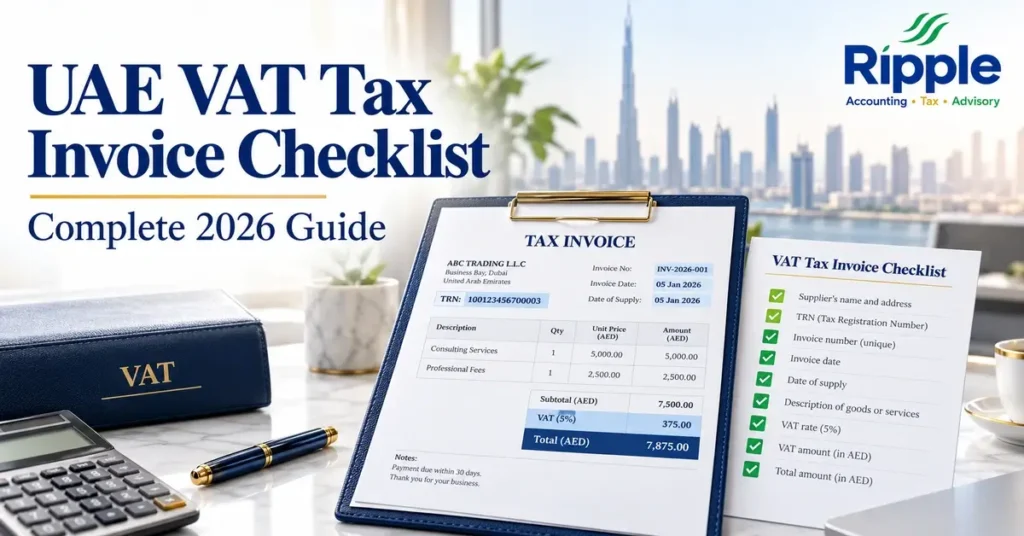
Could one missing detail on your invoice create a UAE VAT compliance problem? A tax invoice may look like a routine sales document, but for a VAT-registered UAE business it is an important part of the tax record. Missing TRNs, incorrect dates, wrong VAT calculations or using a simplified invoice when a full invoice is […]
FTA Decision No. 17 of 2026: Input VAT Recovery on Employee Expenses
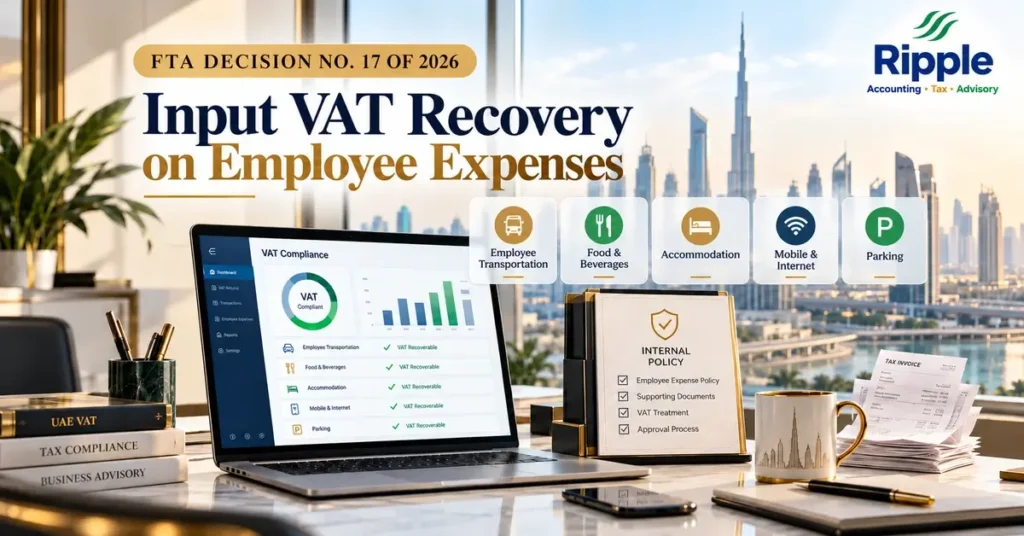
Can your business recover input VAT on employee-related expenses? The UAE Federal Tax Authority (FTA) has issued Decision No. 17 of 2026, setting out specific cases and conditions for recovering or deducting input VAT on certain goods and services provided to employees. The Decision was issued on 9 September 2026 and comes into effect from […]
VAT Record-Keeping Period in the UAE: What to Retain

How long should your UAE business keep VAT invoices, credit notes, import records and other tax documents and what happens if the FTA needs them later? UAE VAT record keeping is an important part of maintaining accurate tax records and supporting VAT returns. Businesses registered for VAT need to retain specific records, invoices and supporting […]
VAT Refunds in the UAE: Eligibility and Supporting Records

Has your UAE business accumulated more recoverable input VAT than output VAT, and are you unsure whether you can claim the difference back? A UAE VAT refund may be available when a VAT-registered business is in a net refundable position after filing its VAT return. However, having a VAT credit does not mean the refund […]
UAE Tax Advisory for Cross-Border Services and Remote Teams

Are you a UAE-based consultancy or agency selling services overseas while managing a remote team across different countries? Cross-border business can create tax questions that are easy to overlook. A UAE company may need to consider VAT treatment for services supplied to overseas customers, Corporate Tax obligations, documentation, and the potential tax implications of employees […]
Input VAT vs Output VAT UAE: A Practical Guide
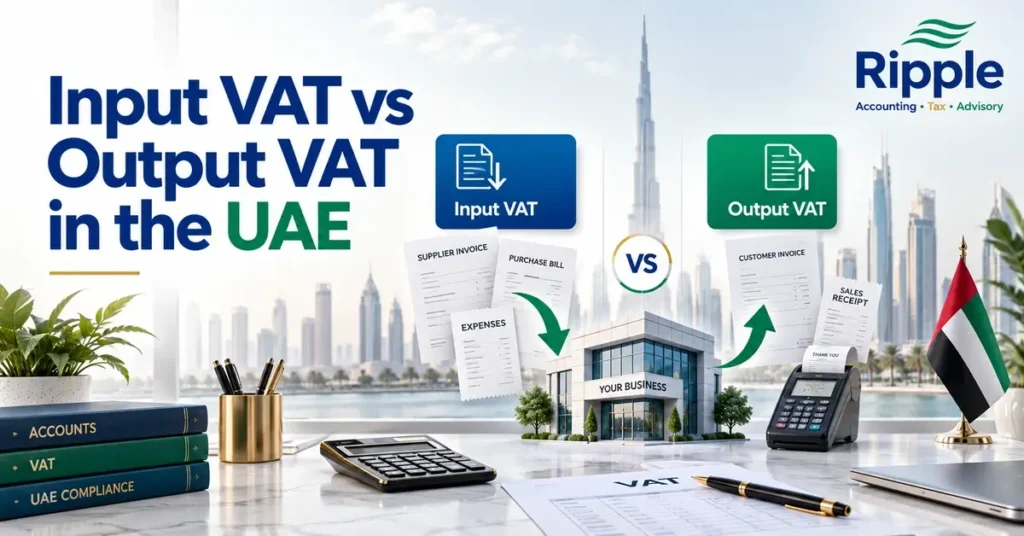
Do you know the difference between the VAT your business charges customers and the VAT it pays on business expenses? Understanding input VAT vs output VAT UAE businesses deal with is essential for preparing accurate VAT returns. Output VAT generally relates to VAT charged or accounted for on taxable supplies, while input VAT relates to […]
UAE VAT Return Errors That Trigger Rework
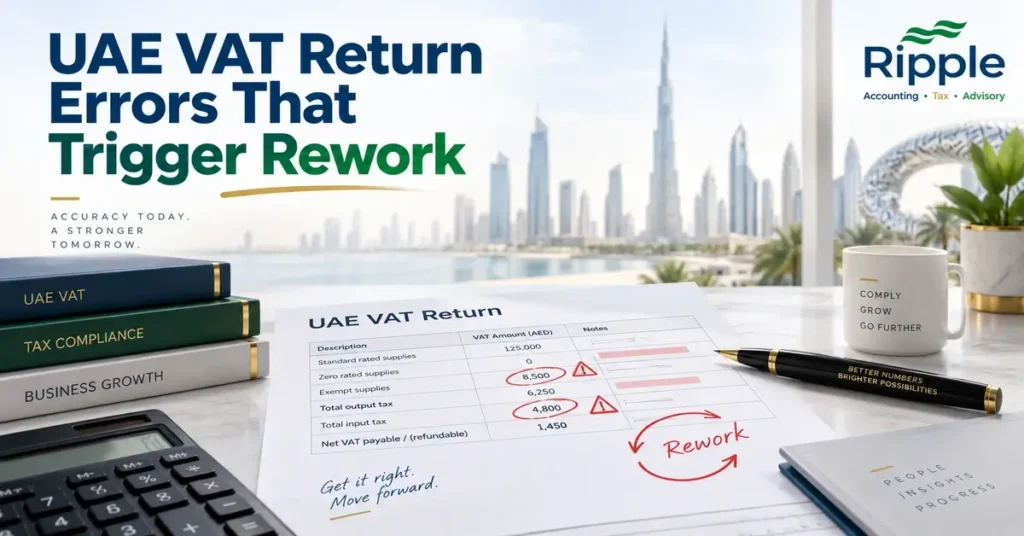
Are small VAT return mistakes creating more work for your finance team than the VAT filing itself? For VAT-registered businesses in the UAE, preparing a return requires more than entering figures into EmaraTax. Sales, purchases, input tax, output tax, credit notes, adjustments and supporting records all need to agree with the underlying accounting data. Even […]
UAE VAT Executive Regulation 2026: Key Changes Under Cabinet Decision No. 149

The UAE has introduced important amendments to its VAT framework through Cabinet Decision No. 149 of 2026, changing several provisions of the Executive Regulation of Federal Decree-Law No. 8 of 2017 on Value Added Tax. Most amendments take effect from 1 October 2026, while certain input tax apportionment changes have a later effective date. For […]
UAE VAT Registration Threshold: Mandatory or Voluntary?
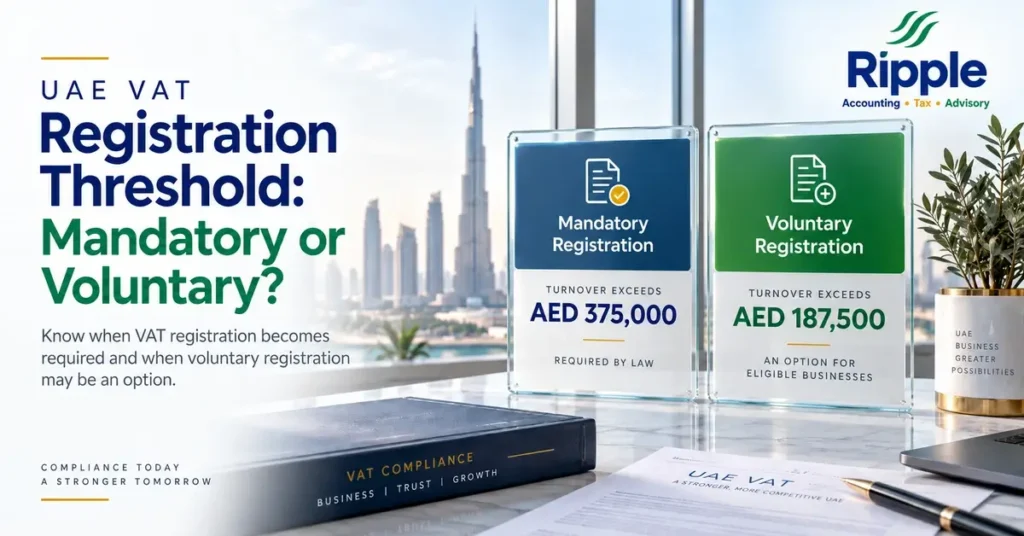
When does VAT registration become mandatory for a UAE business, and when is it simply an option? For UAE businesses, the answer depends on the UAE VAT registration threshold. Registration is generally mandatory when taxable supplies and imports exceed AED 375,000, while businesses reaching AED 187,500 may be eligible for voluntary registration. These thresholds are […]