UAE Tax Residency Certificate Fees, Processing Time and Validity
How much does a UAE Tax Residency Certificate cost, how long does it take to obtain, and when does it expire? Understanding…
Read article
Non-current assets and capital expenditures play a critical role in a company’s long-term financial health. Whether you own a startup, manage an established business, or oversee financial reporting, understanding how these assets are recorded and managed is essential for maintaining accurate financial statements and making informed investment decisions. Unlike everyday operating expenses, non-current assets provide value over several years. Proper accounting ensures these assets are capitalized correctly, depreciated or amortized over their useful lives, and reflected accurately on the balance sheet. This not only improves financial reporting but also supports better budgeting, tax planning, and business growth.
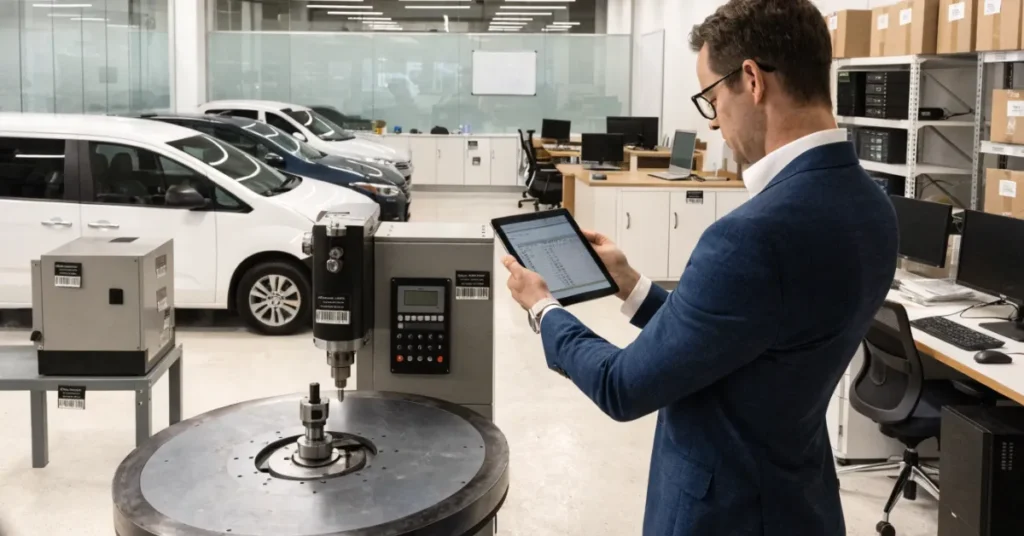
Non-current assets are long-term resources owned by a business that are expected to provide economic benefits for more than one accounting period, typically longer than one year. These assets are not purchased for resale but are used to support business operations, production, or future growth.
Unlike current assets such as cash or inventory, non-current assets remain in the business for an extended period and contribute to generating revenue over time.
In accounting, non-current assets are long-term assets recorded on the balance sheet that are expected to be used for more than twelve months. Their cost is usually allocated over their useful life through depreciation or amortization, depending on the type of asset.
Non-current assets generally share the following characteristics:
Investing in non-current assets helps businesses improve operational efficiency, increase production capacity, and strengthen long-term profitability.
Common reasons businesses invest in long-term assets include:
Some of the most common non-current assets include:
| Asset Type | Example |
|---|---|
| Land | Commercial plots and industrial land |
| Buildings | Offices, warehouses, factories |
| Machinery | Manufacturing equipment |
| Vehicles | Delivery vans and company cars |
| Office Equipment | Computers, printers, servers |
| Furniture | Office desks and workstations |
| Software | ERP systems and licensed software |
| Patents | Intellectual property rights |
Each of these assets contributes to the business over multiple years rather than being consumed immediately.
Understanding the different categories of non-current assets helps businesses classify investments correctly and apply the appropriate accounting treatment.
Tangible assets are physical assets that can be seen and touched. They usually require periodic maintenance and are depreciated over their useful lives.
Examples include:
These assets form the backbone of many businesses, especially in manufacturing, construction, logistics, and retail industries.
Intangible assets have no physical form but provide long-term economic value.
Common examples include:
Most intangible assets are amortized over their useful life, while some, such as goodwill, are tested annually for impairment.
Financial assets represent long-term investments held by a business rather than physical property.
Examples include:
These assets generate returns through dividends, interest income, or capital appreciation.
Capital expenditures, commonly known as CapEx, refer to funds spent on acquiring, improving, or extending the useful life of non-current assets. Instead of being recorded as an immediate expense, these costs are capitalized and recognized over several years.
CapEx represents investments that contribute to the future growth and productivity of a business.
A capital expenditure is money spent to purchase, construct, upgrade, or significantly improve a long-term asset that provides benefits for more than one accounting period.
Rather than reducing profit immediately, these costs are added to the asset’s value and allocated over its useful life through depreciation or amortization.
The primary difference is the expected benefit period. Operating expenses cover routine business costs that support day-to-day activities and are recognized immediately on the income statement.
Capital expenditures create or improve long-term assets and appear on the balance sheet before being gradually expensed over time.
Typical capital expenditures include:
For example, if a company purchases manufacturing equipment for AED 300,000 with an expected useful life of ten years, the entire amount is not recorded as an expense in the year of purchase. Instead, it is capitalized and depreciated over its useful life.
Proper accounting for capital expenditures provides several important benefits:
Businesses that accurately record capital expenditures gain a clearer picture of profitability and asset performance over time.
One of the most important concepts in accounting is understanding the difference between capital expenditures (CapEx) and operating expenses (OpEx). Misclassifying these costs can lead to inaccurate financial statements, incorrect tax calculations, and poor financial decision-making.
The key distinction lies in the purpose and duration of the spending. Capital expenditures create or improve long-term assets, while operating expenses are incurred to keep the business running on a day-to-day basis.
| Capital Expenditures (CapEx) | Operating Expenses (OpEx) |
|---|---|
| Purchase long-term assets | Cover routine operating costs |
| Recorded on the balance sheet | Recorded on the income statement |
| Capitalized and depreciated | Expensed immediately |
| Benefit lasts multiple years | Benefit applies to the current accounting period |
| Increase asset value | Maintain normal business operations |
Capital expenditures increase the value of business assets and affect the balance sheet. The expense is recognized gradually through depreciation or amortization, reducing the financial impact on a single accounting period. Operating expenses, however, reduce net income immediately because they are recognized in full during the period they are incurred.
Capital expenditures are generally not deductible in full during the year they are incurred. Instead, businesses claim deductions over time through depreciation or amortization, depending on applicable accounting and tax regulations. Operating expenses are typically deductible in the same accounting period, provided they qualify as ordinary and necessary business expenses.
Both CapEx and OpEx require cash outflows, but they are presented differently in the cash flow statement.
Understanding this distinction helps business owners assess how funds are being used and supports better financial planning.
Consider a company that spends:
The purchase of the new machine is a capital expenditure because it creates a long-term asset that will generate value for several years. The cost is capitalized and depreciated over the machine’s useful life.
The maintenance cost is an operating expense because it keeps the existing machine in working condition without extending its useful life. Therefore, it is recorded as an expense in the current accounting period.
Correctly distinguishing between CapEx and OpEx ensures accurate financial reporting, better budgeting, and compliance with accounting standards while providing stakeholders with a true picture of the company’s financial performance.
Recording non-current assets correctly is one of the most important aspects of financial accounting. Every long-term asset purchased by a business should be recognized, measured, and recorded according to applicable accounting standards. Proper accounting ensures the balance sheet accurately reflects the company’s assets while matching expenses with the periods that benefit from their use.
The accounting process begins when an asset is acquired and continues throughout its useful life until it is sold, retired, or disposed of.
The first step is purchasing or constructing the asset. Businesses should retain all supporting documents, including:
These records provide evidence of ownership and help determine the total cost of the asset.
The asset should be recorded at its total acquisition cost rather than just the purchase price. This includes all costs directly attributable to bringing the asset into working condition.
Examples include:
Accurate cost determination ensures depreciation calculations are based on the correct asset value.
Once the total acquisition cost is determined, the business records the asset in its accounting system.
Example Journal Entry
A company purchases machinery for AED 180,000 and pays AED 10,000 for installation.
| Account | Debit (AED) | Credit (AED) |
|---|---|---|
| Machinery | 190,000 | |
| Cash / Bank | 190,000 |
The machinery account increases because the business now owns a valuable long-term asset, while cash decreases by the same amount.
Instead of recognizing the full cost as an expense immediately, the asset is capitalized and reported under Property, Plant, and Equipment (PPE) or another appropriate non-current asset category on the balance sheet.
Capitalization helps match the asset’s cost with the periods that benefit from its use.
Once the asset is available for use, depreciation begins based on its expected useful life and residual value.
Businesses should determine:
These estimates should be reviewed periodically to ensure they remain appropriate.
During its useful life, the asset should be reviewed for:
Regular reviews help maintain accurate financial records and ensure compliance with accounting standards.
The initial cost of a non-current asset includes every expenditure directly related to acquiring and preparing the asset for use. Recording only the purchase price can understate the asset’s value and lead to incorrect depreciation calculations.
Businesses should generally include the following costs in the asset’s initial value:
These expenditures are necessary to make the asset operational and should be added to its carrying amount.
Routine operating costs should not be included in the asset’s initial cost. These are recognized as expenses in the period incurred.
Examples include:
Keeping capitalized and operating costs separate improves the accuracy of financial reporting.
Most tangible non-current assets lose value over time due to usage, wear and tear, technological advancements, or aging. Depreciation is the accounting process used to allocate an asset’s cost over its estimated useful life.
Instead of recording the entire cost in the year of purchase, depreciation spreads the expense across multiple accounting periods, aligning costs with the revenue generated by the asset.
Depreciation provides several important benefits:
Without depreciation, financial statements may overstate profits and asset values.
The straight-line method spreads the asset’s cost evenly across its useful life. It is the most commonly used depreciation method because it is simple and predictable.
Formula
Annual Depreciation = (Cost − Residual Value) ÷ Useful Life
Example
A machine costs AED 200,000, has a residual value of AED 20,000, and a useful life of 10 years.
Annual Depreciation:
(AED 200,000 − AED 20,000) ÷ 10 = AED 18,000
This method applies a fixed depreciation rate to the asset’s reducing book value. It results in higher depreciation during the early years and lower depreciation in later years.
It is commonly used for assets that lose value quickly, such as computers, vehicles, and technology equipment.
Depreciation is calculated based on actual usage rather than time.
This method is suitable for:
The more the asset is used, the greater the depreciation expense.
Accumulated depreciation represents the total depreciation recorded since the asset was acquired. It appears as a contra-asset account on the balance sheet and reduces the asset’s carrying amount.
Book Value Formula
Book Value = Asset Cost − Accumulated Depreciation
This figure reflects the remaining value of the asset in the financial statements.
Not all non-current assets are physical. Many businesses own valuable intangible assets that provide long-term economic benefits without having a physical form. Examples include software, patents, trademarks, copyrights, franchise rights, and customer relationships.
Unlike tangible assets, most intangible assets are amortized rather than depreciated.
Amortization is the systematic allocation of the cost of an intangible asset over its useful life. It follows the same matching principle as depreciation but applies specifically to intangible assets with finite useful lives.
Businesses may own:
Some intangible assets, such as goodwill, are not amortized but are tested periodically for impairment.
Accurate accounting for intangible assets helps businesses:
Sometimes a non-current asset loses value more rapidly than expected due to external or internal factors. When the recoverable amount falls below the carrying amount, an impairment loss must be recognized.
Ignoring impairment can result in overstated asset values and misleading financial statements.
An asset may become impaired because of:
Businesses should assess these indicators regularly.
Impairment testing generally involves:
Recognizing impairment:
Regular impairment reviews help ensure assets are reported at amounts that reflect their actual economic value.
Eventually, every non-current asset reaches the end of its useful life or is replaced with a newer asset. When this happens, the business must remove the asset and its accumulated depreciation from the accounting records.
Proper disposal accounting ensures gains or losses are recognized correctly.
Businesses may dispose of assets through:
Each method requires the asset to be removed from the balance sheet.
Before recording the disposal, determine the asset’s book value.
Formula
Book Value = Original Cost − Accumulated Depreciation
Compare the selling price with the book value.
A company purchased equipment for AED 150,000. After several years, accumulated depreciation totals AED 90,000, leaving a book value of AED 60,000.
If the company sells the equipment for AED 70,000, it records a gain of AED 10,000.
If the equipment is sold for AED 50,000, the business records a loss of AED 10,000.
Recording disposals accurately ensures financial statements reflect the true value of remaining assets and provides stakeholders with reliable information for decision-making.
Accounting for non-current assets and capital expenditures requires careful attention to detail. Even small errors can lead to inaccurate financial statements, compliance issues, and poor business decisions. Understanding these common mistakes can help businesses improve financial reporting and avoid costly corrections.
One of the most frequent mistakes is recording the purchase of a long-term asset as an operating expense. Capital expenditures should be capitalized because they provide benefits over multiple accounting periods. Incorrect classification understates assets and overstates expenses.
Some businesses forget to record depreciation or calculate it incorrectly. This can overstate asset values and inflate profits. Depreciation should be calculated consistently using an appropriate method and reviewed annually.
Estimating an asset’s useful life inaccurately affects annual depreciation and financial reporting. Businesses should review useful lives regularly based on actual usage, maintenance, and technological changes.
When an asset loses value due to damage, market conditions, or technological obsolescence, impairment should be recognized promptly. Ignoring impairment results in overstated asset values and misleading financial statements.
An incomplete or outdated fixed asset register makes it difficult to track assets, verify ownership, calculate depreciation, and prepare for audits.
Routine maintenance and repairs should generally be recorded as operating expenses. Only expenditures that significantly improve an asset or extend its useful life should be capitalized.
Businesses should retain purchase invoices, contracts, installation records, warranties, and disposal documentation. Proper documentation supports financial reporting and simplifies audits.
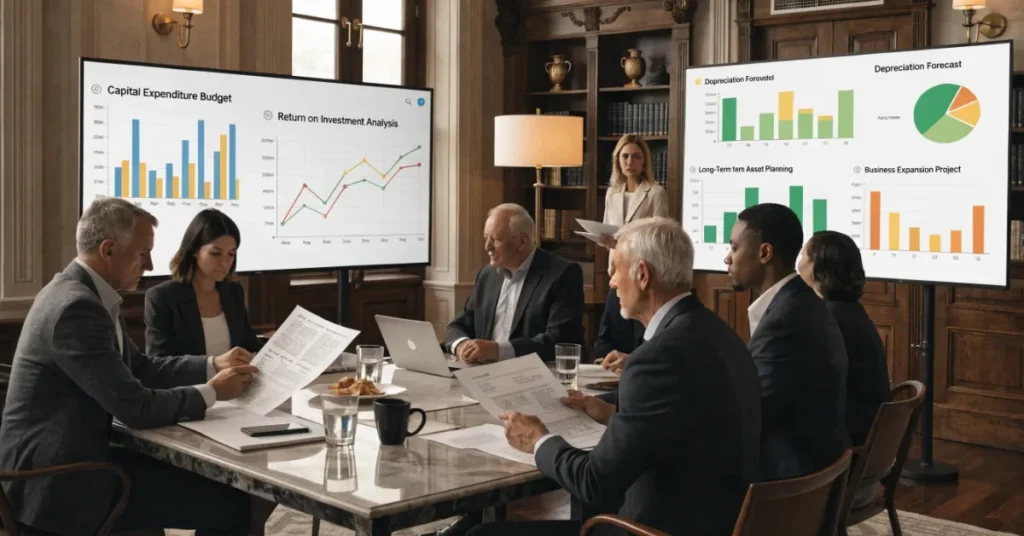
Effective asset management improves operational efficiency, financial reporting accuracy, and compliance. Implementing these best practices helps businesses maximize the value of their long-term investments.
A comprehensive fixed asset register should include:
Establish clear accounting policies that distinguish capital expenditures from operating expenses. This ensures accurate financial reporting and prevents misclassification.
Schedule regular inspections to confirm that recorded assets still exist, are in good condition, and are being used appropriately.
Changes in technology, production methods, or business operations may require adjustments to an asset’s estimated useful life.
Review assets periodically for impairment indicators and record impairment losses when necessary.
Store invoices, contracts, warranties, maintenance records, and disposal documents securely to support audits and financial reporting.
Using accounting software or fixed asset management systems helps businesses:
Compare accounting records with physical assets and investigate discrepancies promptly to maintain accurate financial statements.
Consider a manufacturing company that purchases new production equipment to increase capacity.
The company purchases machinery with the following costs:
Total Capitalized Cost: AED 485,000
The machinery has:
Annual Depreciation = (AED 485,000 − AED 35,000) ÷ 10
Annual Depreciation = AED 45,000
Balance Sheet
Income Statement
Cash Flow Statement
This example demonstrates how proper accounting provides a more accurate representation of business performance and financial position.
Accurate accounting for non-current assets and capital expenditures supports the long-term success of every business. It ensures financial statements present a true and fair view of the company’s financial position while helping management make informed decisions.
Proper asset accounting offers several important benefits:
By maintaining accurate records and applying consistent accounting policies, businesses can maximize the value of their long-term investments while reducing financial reporting risks.
Managing non-current assets and capital expenditures requires accurate bookkeeping, consistent financial reporting, and compliance with applicable accounting standards. Ripple Accountants provides professional accounting, bookkeeping, VAT, corporate tax, audit support, and financial reporting services to help businesses maintain accurate records and make informed financial decisions. To learn more, contact Ripple Accountants at +971 52 356 5409, email info@uaetaxcompliance.ae, or WhatsApp +971 4 250 0833.
Non-current assets are long-term resources that provide economic benefits for more than one year. Examples include land, buildings, machinery, vehicles, software, patents, and long-term investments.
Capital expenditures create or improve long-term assets and are capitalized on the balance sheet. Operating expenses relate to daily business activities and are recognized immediately on the income statement.
Routine repairs and maintenance are generally operating expenses. However, significant improvements that extend an asset’s useful life or increase its capacity are usually treated as capital expenditures.
Non-current assets are initially recorded at acquisition cost, including all directly attributable costs required to prepare the asset for use. They are then depreciated or amortized over their useful lives where applicable.
The straight-line method is the most widely used because it allocates an equal depreciation expense over the asset’s useful life. Other methods include declining balance and units of production.
Yes. Purchased software or software developed for long-term business use is generally recognized as an intangible non-current asset when it meets the applicable recognition criteria.
When an asset is sold, the business removes its cost and accumulated depreciation from the accounting records. Any difference between the selling price and the book value is recognized as a gain or loss.
Depreciation allocates an asset’s cost over its useful life, improving the accuracy of financial reporting, matching expenses with revenue, and providing a realistic view of asset values.
Non-current assets and capital expenditures form the foundation of a business’s long-term growth strategy. Proper accounting ensures these investments are recorded accurately, depreciated or amortized appropriately, and reflected correctly in the financial statements.
Disclaimer: This article is for general informational purposes only and should not be considered accounting, tax, or legal advice. Businesses should consult qualified accounting or financial professionals for guidance based on their specific circumstances and applicable regulations.
Tell us a little about your business and our UAE tax experts will get back to you with clear, practical answers — no obligation.
 Corporate Tax
How much does a UAE Tax Residency Certificate cost, how long does it take to obtain, and when does it expire? Understanding…
Read article Corporate Tax
Are you planning to apply for a UAE Tax Residency Certificate but unsure which documents you need or whether you qualify? Understanding…
Read article Corporate Tax
Do you need a UAE Tax Residency Certificate for a local administrative requirement or to claim benefits under a double taxation agreement?…
Read articlePage 1 of 58
Book a free consultation and get clear answers for your business.
0 Comments