VAT Registration for UAE Freelancers and Consultants: Requirements and Process
Are you working independently as a freelancer or consultant in the UAE and wondering whether you need to register for VAT? Operating…
Read article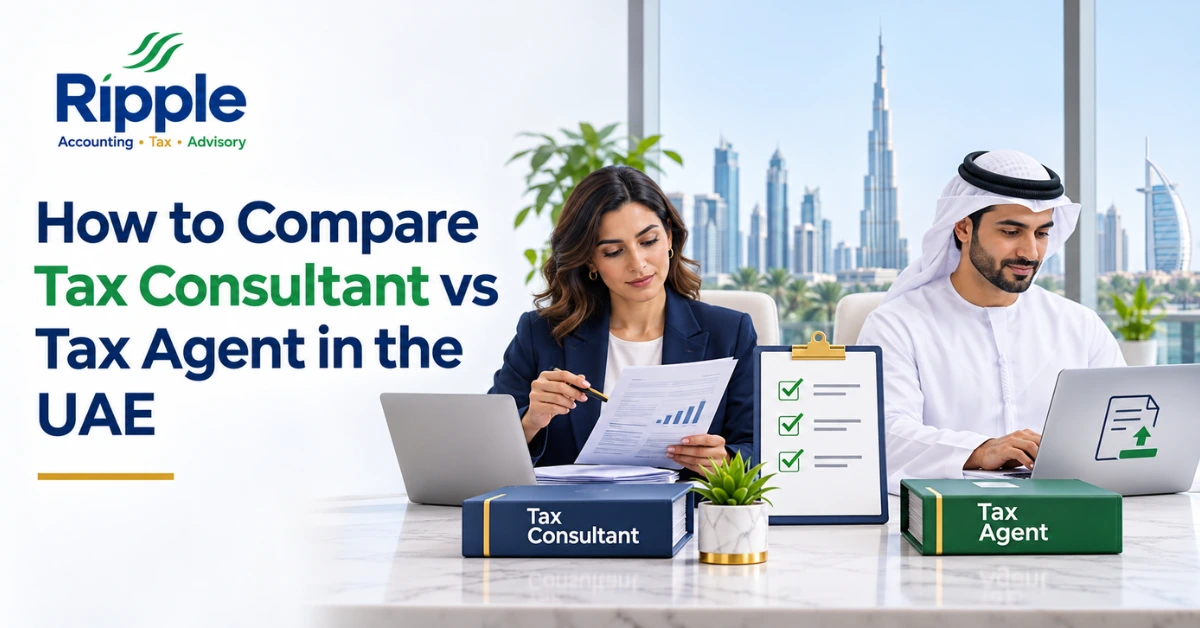
Choosing between a tax consultant and a tax agent in the UAE can affect how your business manages tax compliance, handles Federal Tax Authority (FTA) requirements and addresses tax-related issues. Although both professionals can support businesses with taxation, their roles, responsibilities and legal authority differ. A tax consultant generally provides guidance on VAT, Corporate Tax, tax planning and compliance. An FTA-registered tax agent, on the other hand, has formal recognition to represent an appointed taxable person before the FTA, subject to applicable regulations.
Understanding the difference between a Tax Consultant vs Tax Agent helps business owners select the right professional for their needs. Whether you operate a startup, SME or established company, the right support can help reduce compliance risks and improve tax management.
The main difference between a tax consultant and a tax agent in the UAE is their formal role and authority. A tax consultant provides professional tax advice and compliance support, while an FTA-registered tax agent can represent an appointed taxpayer before the Federal Tax Authority.
Both professionals can help businesses understand UAE tax regulations, but their responsibilities are not identical.
A tax consultant helps businesses understand their tax obligations and manage taxation more effectively. They review financial information, explain relevant tax rules and recommend practical solutions based on the company’s activities.
Their responsibilities may include:
A tax consultant can help a company establish a structured approach to its tax responsibilities.
An FTA-registered tax agent is a professional recognised by the Federal Tax Authority under the UAE Tax Procedures framework. A taxable person can appoint a registered tax agent to assist with tax obligations and represent them before the FTA within the authorised scope.
Their responsibilities may include:
The appointment of a tax agent does not remove the taxpayer’s responsibility for meeting its legal obligations.
The following comparison highlights the main differences between these two professionals.
| Comparison factor | Tax Consultant | FTA-Registered Tax Agent |
|---|---|---|
| Primary role | Tax advice and compliance support | Tax assistance and formal representation |
| FTA registration | Not automatically required as a tax agent | Required to practise as an FTA tax agent |
| Tax planning | Provides advisory support | Can provide advisory support |
| VAT services | Can provide VAT advisory and compliance services | Can assist with VAT obligations |
| Corporate Tax | Supports planning and compliance | Can assist with Corporate Tax matters |
| FTA representation | No representation authority through consultant status alone | Can represent an appointed taxpayer |
| Tax audit support | Provides preparation and advisory assistance | Can provide authorised representation |
| Best suited for | Tax guidance, planning and compliance | Formal FTA representation and tax assistance |
Businesses should assess the professional’s actual qualifications, experience, business authorisation and registration status rather than relying only on their job title.
Businesses should understand the difference between engaging a tax consultant and appointing an FTA-registered tax agent. A tax consultant does not automatically need individual FTA tax agent registration simply to provide general tax advisory services. However, the consultant and their business must comply with applicable professional, commercial and licensing requirements.
An individual who wishes to practise as an FTA-registered tax agent must satisfy the relevant FTA eligibility and registration requirements.
A reliable tax consultant should have relevant education, technical knowledge and practical experience in taxation, accounting or finance.
Before hiring one, consider the following:
These qualifications help businesses assess whether a consultant can handle their tax requirements effectively.
The FTA establishes specific conditions for individuals who want to register as tax agents.
Depending on the applicable requirements, these may include:
The exact eligibility criteria and application process should be checked against the latest FTA requirements before engaging or appointing a tax agent.
Tax consultants and registered tax agents can support several areas of UAE taxation. However, the exact services depend on their qualifications, registration status, professional authorisation and engagement agreement.
Value Added Tax (VAT) requires businesses to maintain accurate records, calculate tax correctly and submit returns within applicable deadlines.
A VAT consultant or tax agent may assist with:
For example, a Dubai-based trading company may need assistance reviewing purchase invoices, sales transactions and input VAT claims before submitting its quarterly VAT return.
UAE Corporate Tax requires businesses to understand their taxable income, allowable deductions, applicable exemptions and reporting responsibilities.
A corporate tax advisor in Dubai or elsewhere in the UAE may provide support with:
For example, a UAE company with multiple business activities may need a tax review to identify non-deductible expenses and understand how different transactions affect its taxable income.
Businesses may receive enquiries, information requests or tax assessments from the Federal Tax Authority.
Professional support can help companies prepare accurate responses and organise relevant documentation.
Common services include:
A tax consultant can help prepare a company for an audit, while an FTA-registered tax agent can provide formal representation within the scope of their appointment.
No. UAE businesses are generally not required to appoint an FTA-registered tax agent to manage their Corporate Tax obligations.
A taxable person can handle its tax responsibilities internally or appoint an external professional for advisory and compliance assistance. However, appointing a registered tax agent can be useful when a company needs formal representation before the FTA or assistance with complex tax procedures. The agent must have the appropriate registration and appointment.
For example, a small UAE consultancy may manage routine Corporate Tax registration and filing with support from an experienced tax consultant. If the company later receives a complicated tax assessment, it may appoint an FTA-registered tax agent for representation.
Importantly, appointing a tax agent does not transfer the company’s ultimate legal responsibility for its tax obligations.
Before appointing a tax agent, businesses should verify their registration with the Federal Tax Authority. A professional’s marketing claims or business website alone do not establish FTA registration.
Follow these steps:
The FTA provides a dedicated service for tax agent registration and publishes information to help taxpayers identify registered professionals.
Businesses searching for an FTA-approved tax agent in Sharjah, a tax agent in Dubai or professional tax support in Abu Dhabi should use the same verification process regardless of location.
Yes, a tax consultant can assist with VAT return preparation and filing when the relevant services fall within their professional and business authorisation. However, preparing a VAT return and formally representing a taxpayer before the FTA are different responsibilities.
A consultant may review sales, purchases, input VAT and output VAT, calculate the VAT payable or refundable and assist with return preparation. A registered tax agent can also represent an appointed taxpayer before the FTA.
Businesses should confirm the provider’s qualifications, licensing and authorised scope before engaging them for VAT services.
The right professional depends on your company’s tax position, internal resources and need for formal FTA representation.
Consider hiring a tax consultant when:
A tax consultant can provide ongoing guidance and help establish a consistent tax compliance process.
An FTA-registered tax agent may be more suitable when:
Always confirm that the agent’s registration is active and that the appointment covers the services you require.
Some businesses benefit from using both professionals.
For example, a UAE manufacturing company may work with a tax consultant throughout the year for VAT reviews, Corporate Tax calculations and financial record checks. If the company receives an FTA assessment, it may also appoint a registered tax agent for formal representation.
This arrangement allows the business to receive regular tax advice while accessing the specific representation authority of a registered tax agent when necessary.
Choosing a tax advisory firm requires more than comparing service fees. Businesses should assess the provider’s technical knowledge, practical experience and ability to support their specific requirements.
Consider these factors before making a decision:
Whether you are looking for a corporate tax consultant in Abu Dhabi, a tax agent in Dubai or an FTA-registered professional in Sharjah, prioritise relevant expertise over location alone.
For companies operating in DMCC or other UAE free zones, also check whether the firm understands free zone Corporate Tax rules and the conditions for Qualifying Free Zone Person status.
Managing VAT and Corporate Tax requires accurate financial records, an understanding of current regulations and consistent compliance procedures.
Ripple Accountants supports businesses seeking practical guidance on their accounting and tax requirements. Businesses can assess the support they need across several areas, including:
For additional information, explore the available accounting and bookkeeping services and Corporate Tax consultancy services.
The right professional support depends on your business structure, tax obligations and need for formal FTA representation. Where a service requires a registered tax agent, businesses should confirm the appropriate registration and appointment before proceeding.
No. A tax consultant provides tax advice, planning and compliance support. An FTA-registered tax agent has formal authority to represent an appointed taxpayer before the Federal Tax Authority under applicable UAE tax regulations.
No. Businesses can manage their tax obligations internally or appoint external tax professionals. However, they may choose a registered tax agent when they require formal representation before the FTA.
A tax consultant cannot represent a taxpayer as a tax agent based on consultancy status alone. Formal tax agent representation requires the appropriate FTA registration and appointment.
Tax consultancy fees vary depending on business size, transaction volume, service complexity and the scope of work. VAT return preparation, Corporate Tax advisory and tax audit support may have different fee structures.
Yes. A professional firm can provide tax consultancy and tax agent services if it meets the relevant licensing and FTA registration requirements. Businesses should verify the registration of the relevant tax agent.
Yes. An appropriately appointed FTA-registered tax agent can assist with VAT and Corporate Tax matters within the scope of their professional responsibilities and appointment.
Understanding the difference between a tax consultant and a tax agent helps UAE businesses choose suitable professional support. A tax consultant focuses on tax advice, planning and compliance, while an FTA-registered tax agent can provide formal representation before the Federal Tax Authority.
Your decision should depend on your company’s tax requirements, business activities and compliance challenges.
If you need guidance on VAT, Corporate Tax, accounting or tax compliance, Ripple Accountants can help you assess your requirements and identify suitable professional support.
Visit www.uaetaxcompliance.ae to explore further tax compliance support.
Disclaimer: This article provides general information about UAE tax consultancy and tax agent requirements and should not be considered legal or tax advice. Requirements and regulations may change, so businesses should consult the latest FTA guidance before making tax-related decisions.
Tell us a little about your business and our UAE tax experts will get back to you with clear, practical answers — no obligation.
 VAT
Are you working independently as a freelancer or consultant in the UAE and wondering whether you need to register for VAT? Operating…
Read article VAT
Does operating from a UAE free zone mean your company is automatically exempt from VAT registration? Not necessarily. Although free zones offer…
Read article Compliance
Are your business invoicing processes ready to meet the UAE’s electronic invoicing requirements? Non-compliance with the Electronic Invoicing System can result in…
Read articlePage 1 of 67
Book a free consultation and get clear answers for your business.
0 Comments