Food Cost and Wastage Controls: An Accounting System for Restaurants
Running a restaurant is not only about increasing sales. A restaurant can have strong revenue and still lose profit through excessive food…
Read article
Are your accounting records ready for a UAE Corporate Tax return, or could a small bookkeeping error create a bigger filing problem?
A records review before Corporate Tax filing UAE businesses can help identify unreconciled balances, missing documents, incorrect classifications and tax adjustments before the return is submitted. Reviewing the trial balance, financial statements, transactions and supporting records gives businesses a stronger starting point for Corporate Tax preparation.
So, what should businesses check before filing? Let’s walk through the key areas step by step.

A Corporate Tax return is based on financial information, so the quality of the underlying accounting records matters.
The FTA explains that taxable income starts with the accounting net profit or loss and is then adjusted for items specified under the Corporate Tax rules.
This means an error in the accounting records can potentially flow into the tax calculation. For example, a business may discover during its review that:
A pre-filing review gives the business an opportunity to address these issues before completing the return.

A records review before CT filing UAE businesses undertake is a structured check of the accounting and supporting information that will be used to prepare the Corporate Tax return.
It is not simply about checking whether the accounts balance.
The review should consider whether:
The purpose is to create a reliable bridge between bookkeeping and Corporate Tax filing.
The trial balance is one of the first places to start. It provides the closing balances of the company’s accounts and forms an important part of the accounting information used to prepare the financial statements.
During a trial balance review UAE businesses should check whether:
The FTA’s Corporate Tax Returns Guide states that accounting income for a juridical person is based on the accounting net profit or loss reported in its financial statements. Therefore, reviewing the trial balance before finalising the accounts can help identify errors before they affect the Corporate Tax calculation.
Bank reconciliation should be another key step in the review.
Compare the accounting records against the company’s bank statements and investigate differences such as:
Old unreconciled balances should not simply be carried forward without investigation. A clean bank reconciliation helps confirm that the cash figures reported in the accounts are supported by actual banking activity.
Revenue should be reviewed before preparing the Corporate Tax calculation. Compare the accounting records with available supporting information, such as:
The objective is to determine whether revenue has been completely and accurately recorded.
Businesses should also investigate unusual movements in revenue compared with previous periods.
For companies with multiple revenue streams, separate categories may need additional review depending on the nature of the income and the applicable Corporate Tax rules.
Expenses should also be checked for completeness, classification and supporting documentation. Review major expense categories such as:
The purpose is not simply to reduce taxable income. The business needs to determine whether expenses have been recorded correctly and whether any Corporate Tax adjustment is required.
The FTA explains that legitimate business expenses incurred to derive taxable income are generally deductible, subject to the Corporate Tax rules and specific limitations.
Outstanding customer and supplier balances can reveal accounting issues that need to be resolved before filing. For receivables, review:
For payables, review:
This process can help identify transactions that may have been recorded incorrectly or remain unresolved at year-end.
Businesses with equipment, vehicles, machinery, computers or other fixed assets should review their asset records. Compare the fixed asset register with the general ledger and identify:
The FTA has specifically identified records of assets, including purchases and disposals, among the records Taxable Persons should maintain.
A review can therefore help ensure that the accounting records and supporting asset documentation are consistent.
Loan and liability balances should also be checked. For bank and shareholder loans, compare the accounting records with relevant agreements and statements.
Review:
Where financing involves Related Parties or Connected Persons, additional Corporate Tax and transfer pricing considerations may apply.
The FTA confirms that transfer pricing rules apply to transactions involving Related Parties and Connected Persons, including transactions within the UAE and across borders.
This is an important part of a tax records checklist for groups and businesses with related entities. Look for transactions such as:
The review should establish whether these transactions are correctly recorded and appropriately supported.
Businesses should also determine whether relevant transfer pricing documentation or disclosures are required.
One of the most important steps is comparing accounting profit with taxable income. The FTA explains that taxable income is based on accounting net profit or loss after adjustments required under the Corporate Tax Law.
Potential areas for review include:
The FTA’s Corporate Tax Returns Guide specifically includes a section for accounting adjustments and exempt income when determining taxable income.
A good working paper should show the movement from:
Accounting profit/loss → Tax adjustments → Taxable income → Corporate Tax payable
This makes the calculation easier to review and explain.
Before filing, the final financial statements should be reviewed against the underlying accounting records.
Check that:
The FTA’s Corporate Tax Returns Guide states that resident juridical persons use the accounting net profit or loss from their financial statements as the accounting income figure in the return.
Good bookkeeping is not only about numbers. Businesses should also be able to support important balances and transactions with appropriate records.
Depending on the business, this may include:
The FTA has stated that Taxable Persons must maintain records and documents supporting the information provided in their Corporate Tax returns.
Once the accounts have been reviewed, businesses can check whether the information needed for the actual return is available.
The FTA’s Corporate Tax Returns Guide provides detailed guidance on completing the return and explains the information that may be required.
Businesses should verify information such as:
Businesses can use the following checklist before starting the Corporate Tax return:
This checklist is a practical starting point. The appropriate review will depend on the company’s size, activities, accounting system and Corporate Tax position.
A records review can uncover several issues that may otherwise remain unnoticed until after filing.
Businesses should also consider record retention as part of their pre-filing process. The FTA states that Taxable Persons and Exempt Persons must generally retain relevant records and documents for at least seven years following the end of the relevant Tax Period.
The FTA also explains that records should support the information reported in Corporate Tax returns and may include transaction, asset, liability and shareholding records. Businesses should therefore establish an organised system for storing records by entity and Tax Period.
A records review should ideally begin before the Corporate Tax filing deadline, not immediately before submitting the return.
Starting early gives the business time to:
The FTA states that Corporate Tax returns and Corporate Tax payable are generally due within nine months from the end of the Tax Period.
Using that period for preparation rather than waiting until the deadline can make the filing process much smoother.
A Corporate Tax return is only as reliable as the financial information behind it. If bookkeeping records contain unreconciled balances, missing documents or unclear transactions, identifying these issues before filing can be valuable.
Ripple Accountants can help businesses review their accounting records before Corporate Tax filing and identify areas that may need attention. A compliance review can cover areas such as:
If you are preparing for your UAE Corporate Tax return and want an independent review of your records, contact Ripple Accounting, Tax & Advisory to discuss the the support your business requires.
Explore Ripple Compliance Review Services
Businesses should review the trial balance, general ledger, bank reconciliations, revenue, expenses, receivables, payables, fixed assets, liabilities, related-party transactions, financial statements and relevant Corporate Tax adjustments.
The trial balance provides the closing balances used in preparing financial statements. Reviewing it can help identify unreconciled accounts, incorrect classifications and unusual balances before they affect the Corporate Tax calculation.
Not always. The FTA states that taxable income starts with accounting net profit or loss and is adjusted for items specified under the Corporate Tax rules.
Relevant records and documents should generally be retained for at least seven years following the end of the relevant Tax Period.
Yes. Ripple can provide a compliance review covering areas such as the trial balance, accounting records, reconciliations, supporting documentation and Corporate Tax-related adjustments. Businesses can contact Ripple to discuss the appropriate scope and requirements.
A records review before CT filing UAE businesses conduct can help connect accurate bookkeeping with a more reliable Corporate Tax return. Reviewing the trial balance, bank reconciliations, revenue, expenses, assets, liabilities, related-party transactions and tax adjustments can help identify problems before they reach the filing stage. The aim is not simply to make the accounts balance. It is to ensure that the financial information used for Corporate Tax is complete, supported and properly reviewed. Businesses should also keep the relevant records for the required retention period and refer to the latest FTA guidance when preparing their returns.
Disclaimer: This article is provided for general informational purposes only and does not constitute tax, accounting, legal or financial advice. Corporate Tax requirements can vary according to a business’s structure, activities, accounting records and specific circumstances. UAE legislation and FTA guidance may also be updated. Businesses should review the latest official FTA guidance and obtain professional advice before making Corporate Tax filing or compliance decisions.
Tell us a little about your business and our UAE tax experts will get back to you with clear, practical answers — no obligation.
 Compliance
Running a restaurant is not only about increasing sales. A restaurant can have strong revenue and still lose profit through excessive food…
Read article VAT
VAT
The UAE Federal Tax Authority has issued VAT Public Clarification VATP046 on 4 September 2026, providing detailed guidance on significant amendments to…
Read article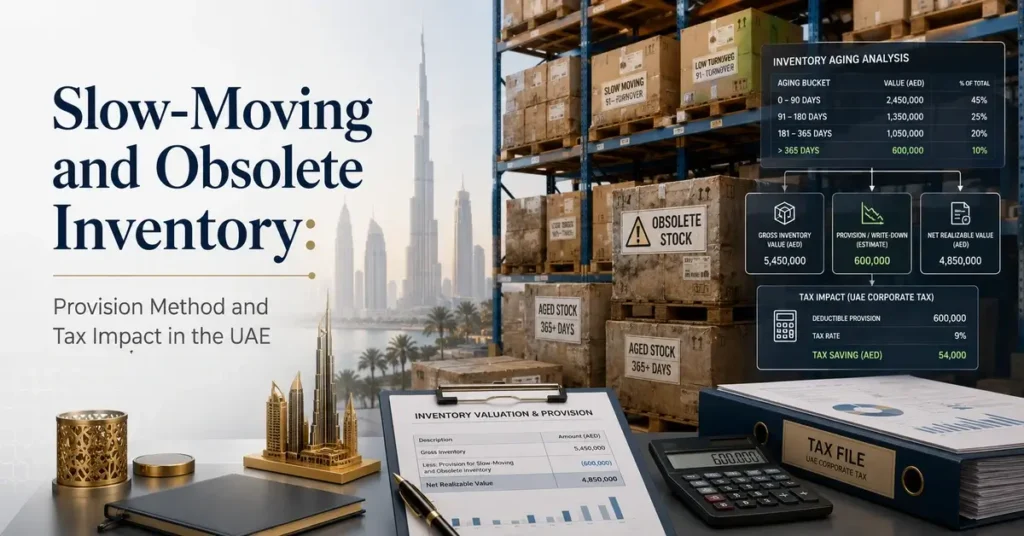 Corporate Tax
Is your UAE business carrying inventory that has been sitting on the shelves for months or even years? Slow-moving and obsolete stock…
Read articlePage 12 of 45
Book a free consultation and get clear answers for your business.
0 Comments