UAE Tax Residency Certificate Requirements: Documents and Eligibility
Are you planning to apply for a UAE Tax Residency Certificate but unsure which documents you need or whether you qualify? Understanding…
Read article
Freelancing has become one of the fastest-growing ways to earn income in the UAE, with professionals working across consulting, marketing, technology, design, media, education, and other service industries. Since the introduction of the UAE Corporate Tax regime, many freelancers have questions about whether their income is taxable, what expenses they can deduct, and how to stay compliant. Understanding the Corporate Tax rules is essential because not every freelancer has the same tax obligations. Whether you operate under a freelance permit, a sole establishment, or another business structure, your tax position depends on factors such as your annual business turnover, taxable income, and the nature of your activities.
Freelancer Corporate Tax refers to the Corporate Tax obligations that may apply to individuals carrying on a business or business activity in the UAE. The Corporate Tax regime is governed by Federal Decree-Law No. 47 of 2022 on the Taxation of Corporations and Businesses, together with subsequent amendments and decisions issued by the UAE Ministry of Finance and the Federal Tax Authority (FTA).
Unlike employees who earn salaries, freelancers generate income by providing services independently. Depending on the circumstances, this income may be treated as business income and could fall within the scope of Corporate Tax.
A freelancer is generally an individual who provides professional services independently without being employed under a traditional employment contract. Freelancers often work with multiple clients and invoice them directly for completed work.
Common freelance professions include:
Understanding your legal structure is important because Corporate Tax obligations may differ.
A freelance permit allows an individual to provide approved professional services under the regulations of the issuing authority. It is commonly used by independent professionals working in creative, technology, education, consulting, and media sectors.
A sole establishment is a business owned by one individual conducting commercial or professional activities in their own name. For Corporate Tax purposes, a natural person carrying on a business may be subject to specific rules if the relevant thresholds are met.
Some freelancers choose to establish an LLC instead of operating as individuals. In this case, the company itself becomes a taxable person under the UAE Corporate Tax regime and must meet the applicable registration, filing, and compliance requirements.
Many professional services may constitute business activities, including:
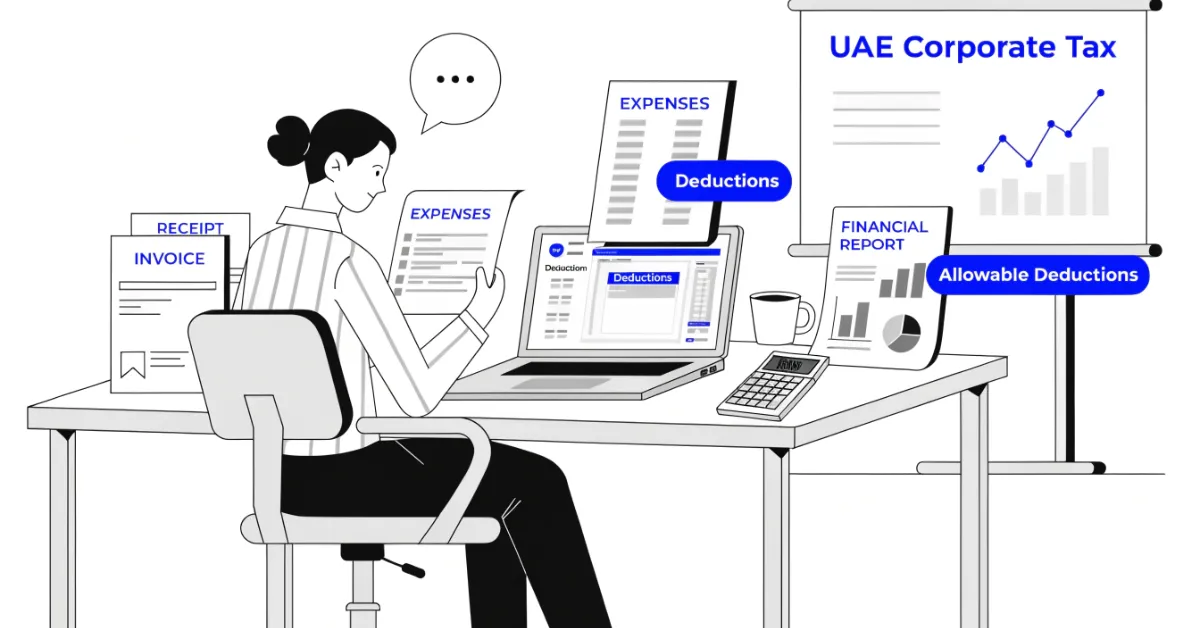
Not every freelancer automatically pays Corporate Tax. Whether Corporate Tax applies depends on several factors, including the legal status of the individual, the nature of the business activity, and the annual business turnover. Under current UAE Corporate Tax rules, natural persons carrying on a business or business activity are generally subject to Corporate Tax only if their total annual business turnover exceeds AED 1 million within a calendar year. This threshold applies to business turnover rather than profit.
If a freelancer’s turnover does not exceed this threshold, they are generally outside the scope of Corporate Tax as a natural person. However, they should continue maintaining proper financial records and monitor their annual turnover.
The following individuals may have Corporate Tax obligations, depending on their circumstances:
Freelancers operating from a UAE Free Zone should not assume they are automatically exempt from Corporate Tax. Tax treatment depends on factors such as:
Each case should be reviewed individually based on the applicable Corporate Tax legislation.
Mainland freelancers carrying on business activities should determine whether:
Foreign individuals providing services in the UAE may also have Corporate Tax obligations depending on factors such as:
Professional advice is recommended where cross-border activities are involved.
Freelancers often receive income from multiple clients and different service offerings. Generally, income earned from carrying on a business or business activity in the UAE may fall within the scope of Corporate Tax if the relevant conditions and thresholds are met.
Understanding which types of income are treated as business income helps freelancers calculate taxable income accurately and maintain compliance.
Consultants provide professional advice across industries such as management, finance, operations, strategy, human resources, compliance, and business development.
Examples include:
Consulting fees earned from clients generally form part of business income.
Marketing professionals offering independent services may receive income from:
These service fees are generally considered business income.
Technology freelancers commonly earn income through:
Payments received for these services generally constitute business income.
Creative professionals may generate income from:
These earnings are typically treated as income from business activities.
Freelancers working in digital media may earn revenue through:
Income from professional content creation services generally forms part of business revenue.
Professional trainers and coaches may receive income from:
Fees earned from these activities are generally regarded as business income.
Independent technical professionals often provide:
Professional service fees generated from these activities are generally considered business income.
| Income Category | Generally Business Income? | Example Services |
|---|---|---|
| Consulting | Yes | Business, HR, Strategy |
| Marketing | Yes | SEO, Digital Marketing, Branding |
| IT Services | Yes | Software Development, Cybersecurity |
| Graphic Design | Yes | Logo, UI/UX, Branding |
| Content Creation | Yes | Writing, Photography, Video |
| Training & Coaching | Yes | Workshops, Online Courses |
| Engineering Services | Yes | Engineering Consultancy |
| Technical Services | Yes | Project Management, Technical Advisory |
Not all money received by a freelancer is treated as business income for UAE Corporate Tax purposes. The Corporate Tax rules distinguish between income earned from carrying on a business and income received in a personal capacity. Understanding this difference helps freelancers avoid reporting non-business income incorrectly.
The following examples may generally fall outside the scope of Corporate Tax for a natural person, depending on the facts and applicable legislation.
Income earned as an employee under an employment contract is generally not treated as business income for Corporate Tax purposes. If you have a full-time job and freelance separately, only the income from your freelance business should be considered when assessing Corporate Tax obligations.
Certain personal investment income earned by a natural person may fall outside the scope of Corporate Tax, provided it does not arise from a licensed business activity or amount to conducting a business.
Examples may include:
The tax treatment depends on the nature of the investment and how it is managed.
Money or assets received as genuine personal gifts are generally not considered business income, provided they are unrelated to the provision of professional services.
Examples include:
These should not be confused with payments received from clients.
Selling personal belongings occasionally is generally not treated as carrying on a business.
Examples include:
However, regularly buying and selling goods for profit may constitute a business activity.
Depending on individual circumstances, income received outside a business activity may also fall outside the Corporate Tax regime.
Examples include:
Freelancers should assess each source of income carefully and retain supporting documentation.
A key benefit of the UAE Corporate Tax regime is that eligible business expenses incurred wholly and exclusively for the business may generally be deducted when calculating taxable income, subject to the Corporate Tax Law and related regulations.
Keeping complete invoices, receipts, contracts, and payment records is essential to support every deduction claimed.
Freelancers operating from a dedicated office can generally claim qualifying business-related costs.
Examples include:
If you work from home and part of your residence is used regularly for business, an appropriate business portion of certain expenses may be deductible where supported by proper records and a reasonable allocation method.
Examples include:
Personal living expenses should not be claimed.
Technology expenses are common deductible costs for freelancers.
Examples include:
Where applicable, certain assets may be treated according to the UAE Corporate Tax depreciation or adjustment rules.
Digital subscriptions used for business operations may qualify as deductible expenses.
Examples include:
Many freelancers rely on online platforms to generate clients.
Deductible costs may include:
Expenses incurred to promote your freelance business may generally qualify.
Examples include:
Professional services obtained to operate the business may also qualify.
Examples include:
Business-related regulatory costs are commonly deductible.
Examples include:
Business banking costs may also qualify.
Examples include:
Travel undertaken wholly for business purposes may generally be deductible.
Examples include:
Travel should have a clear business purpose and supporting documentation.
Where applicable, freelancers may deduct expenses relating to business operations.
Examples include:
Business-related insurance premiums may generally qualify.
Examples include:
Training directly related to your business activity may be deductible.
Examples include:
Not every expense paid by a freelancer can be claimed against business income. Personal or non-business expenses are generally not deductible under the UAE Corporate Tax rules.
Common examples include:
Claiming non-deductible expenses may increase the risk of adjustments during a Corporate Tax review or audit.
Maintaining a clear distinction between personal and business finances makes Corporate Tax compliance much easier and improves the accuracy of financial records.
Freelancers should avoid using one account for both personal and business transactions whenever possible.
Using a dedicated business account helps:
Maintain supporting documents for all business transactions, including:
Digital copies should be stored securely.
Update accounting records throughout the year instead of waiting until the filing deadline.
Monthly bookkeeping helps:
Accounting software can simplify:
The UAE Corporate Tax regime requires businesses to maintain adequate records to support income and expense reporting. Proper documentation also helps demonstrate compliance if requested by the Federal Tax Authority (FTA).
Freelancers should retain organized records for the required retention period under UAE tax legislation.
Maintain copies of:
Keeping complete, accurate, and well-organized records reduces compliance risks, supports legitimate tax deductions, and makes Corporate Tax registration, return filing, and future FTA reviews significantly easier.

Freelancers who fall within the scope of the UAE Corporate Tax regime must register with the Federal Tax Authority (FTA) and obtain a Corporate Tax Registration Number (TRN) within the prescribed timelines. Registration obligations depend on the freelancer’s legal status, business activity, and applicable FTA requirements.
Natural persons carrying on a business or business activity should assess whether they meet the registration requirements under the UAE Corporate Tax Law and the latest FTA decisions.
Registration may be required if:
Always refer to the latest FTA guidance for applicable registration deadlines.
Prepare the following documents before starting the registration process:
The registration process is completed through the FTA’s EmaraTax portal.
Typical steps include:
Keep your registration details up to date if your business information changes.
After registration, freelancers within the Corporate Tax regime must file their Corporate Tax return for each tax period and pay any Corporate Tax due by the applicable deadline.
Accurate bookkeeping throughout the year makes the filing process much easier.
Record all:
Calculate your taxable income by determining your business revenue and deducting eligible business expenses in accordance with the UAE Corporate Tax Law.
Before filing, verify that every deduction:
Compile:
Complete the return through the EmaraTax portal and ensure all information is accurate before submission.
If Corporate Tax is payable, make the payment before the due date to avoid administrative penalties and interest where applicable.
Many compliance issues arise from simple bookkeeping and reporting errors. Avoiding these mistakes can help reduce the risk of penalties and FTA inquiries.
Common mistakes include:
The following example demonstrates how taxable income may be calculated. It is provided for illustration only.
| Description | Amount (AED) |
|---|---|
| Annual freelance revenue | 1,400,000 |
| Office rent | (60,000) |
| Software subscriptions | (18,000) |
| Internet and communication | (12,000) |
| Marketing expenses | (35,000) |
| Accounting and tax services | (20,000) |
| Business travel | (25,000) |
| Other allowable business expenses | (80,000) |
| Net taxable income before applicable tax adjustments | 1,150,000 |
The final Corporate Tax liability depends on the applicable provisions of the UAE Corporate Tax Law, available reliefs, and any adjustments required under the legislation. Freelancers should ensure calculations are based on their actual financial records.
Good financial management and timely compliance can help freelancers avoid unnecessary tax issues.
Follow these best practices:
Managing Corporate Tax obligations can be challenging while running a freelance business. Ripple Accountants assists freelancers with Corporate Tax registration, bookkeeping, accounting, taxable income assessments, expense reviews, return preparation, and ongoing compliance support. Our experienced professionals help ensure your records are accurate, your filings are completed on time, and your business remains aligned with the latest UAE Corporate Tax requirements. Whether you are starting your freelance journey or need assistance with annual compliance, our team can provide practical guidance tailored to your business.
Contact Ripple Accountants
Not all freelancers are subject to Corporate Tax. For natural persons, Corporate Tax generally applies only if they carry on a business or business activity and their annual business turnover exceeds the applicable threshold under the UAE Corporate Tax rules.
Income earned from providing professional or commercial services as part of a business activity is generally considered business income and may fall within the scope of Corporate Tax if the applicable conditions are met.
Yes. Eligible expenses incurred wholly and exclusively for the business may generally be deducted when calculating taxable income, provided they comply with the Corporate Tax Law and are supported by proper documentation.
Where part of a home is used regularly and exclusively for business purposes, an appropriate portion of qualifying expenses may be deductible, subject to reasonable allocation and supporting records.
No. Operating in a Free Zone does not automatically exempt a freelancer from Corporate Tax. The tax treatment depends on the legal structure, business activities, and whether the relevant conditions under the Corporate Tax regime are satisfied.
Freelancers should retain invoices, receipts, contracts, bank statements, accounting records, licence documents, tax filings, and any supporting documentation relevant to business income and expenses for the required retention period.
Missing registration, filing, or payment deadlines may result in administrative penalties imposed by the Federal Tax Authority. Timely compliance helps avoid unnecessary costs and regulatory issues.
While not mandatory, accounting software helps freelancers maintain accurate records, monitor income and expenses, prepare financial reports, and simplify Corporate Tax compliance.
Understanding how the UAE Corporate Tax regime applies to freelancers is essential for maintaining compliance and making informed financial decisions. Identifying taxable business income, claiming eligible deductions, and keeping accurate accounting records can help reduce compliance risks and simplify annual tax obligations.
Disclaimer: The information provided in this article is for general informational purposes only and does not constitute legal, tax, or financial advice. While every effort has been made to ensure accuracy based on the UAE Corporate Tax Law and publicly available guidance as of the publication date, tax regulations may change. Readers should consult the latest guidance issued by the Federal Tax Authority (FTA) or seek advice from a qualified tax professional before making any business or tax-related decisions. Ripple Accountants accepts no liability for any actions taken based on the information contained in this article.
Tell us a little about your business and our UAE tax experts will get back to you with clear, practical answers — no obligation.
 Corporate Tax
Are you planning to apply for a UAE Tax Residency Certificate but unsure which documents you need or whether you qualify? Understanding…
Read article Corporate Tax
Do you need a UAE Tax Residency Certificate for a local administrative requirement or to claim benefits under a double taxation agreement?…
Read article Bookkeeping
How can UAE businesses ensure employees receive the correct salary every month? Payroll involves more than adding basic pay and allowances. Employers…
Read articlePage 1 of 58
Book a free consultation and get clear answers for your business.
0 Comments