UAE Tax Residency Certificate Fees, Processing Time and Validity
How much does a UAE Tax Residency Certificate cost, how long does it take to obtain, and when does it expire? Understanding…
Read article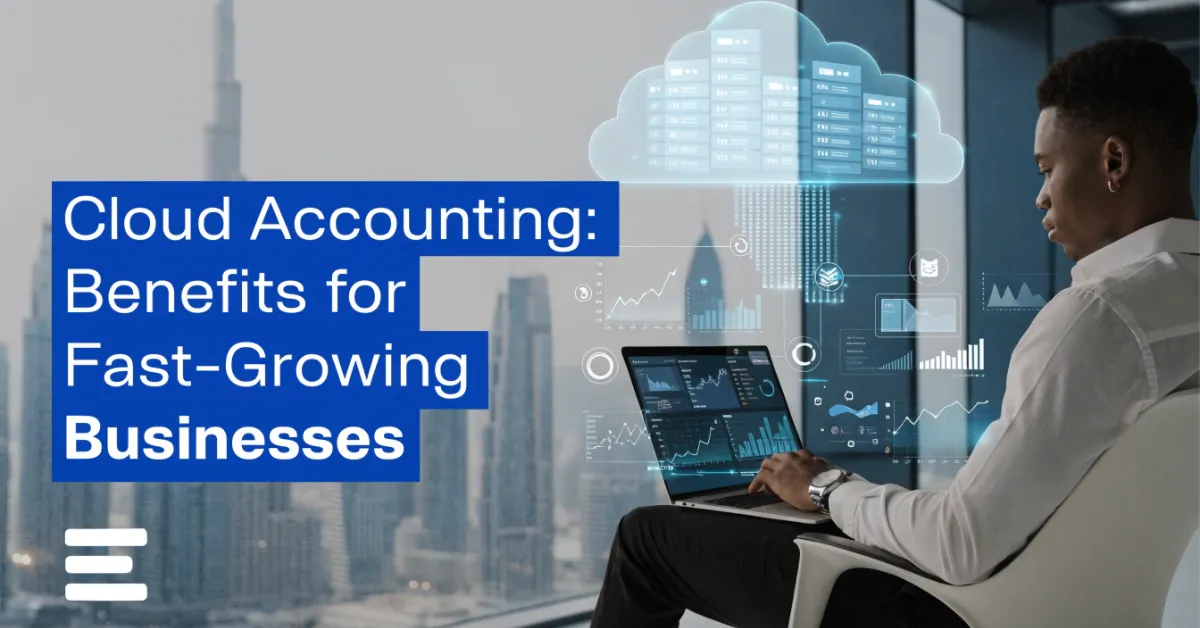
Businesses today are expanding faster than ever, thanks to digital technology, online sales, and global markets. As operations grow, managing finances with traditional accounting methods often becomes time-consuming and inefficient. Manual bookkeeping, delayed financial reports, and limited access to accounting data can slow down decision-making and affect business performance. This is where Cloud Accounting becomes a valuable solution.
Cloud accounting allows businesses to manage their financial information securely through the internet. Instead of relying on software installed on a single computer, business owners, accountants, and finance teams can access real-time financial data from anywhere using a laptop, tablet, or smartphone. This flexibility helps businesses stay organized, improve collaboration, and make faster financial decisions.
Cloud accounting is an online accounting system that stores financial data on secure cloud servers instead of a local computer or office network. Users can log in through a web browser or mobile application to manage bookkeeping, invoices, payroll, expenses, tax records, and financial reports in real time. Unlike traditional desktop accounting software, cloud accounting automatically updates software features, backs up financial data, and allows multiple authorized users to work on the same information simultaneously. This makes it easier for business owners, accountants, and financial advisors to collaborate without exchanging files manually.
Modern cloud accounting software combines accounting, reporting, automation, and financial management into one centralized platform. As a result, businesses spend less time on manual processes and more time focusing on growth.
A cloud-based accounting system connects your financial activities to an online platform. Every transaction, invoice, payment, and expense is securely stored and updated automatically.
Here’s how it typically works:
This real-time system ensures that business owners always have access to the latest financial information whenever they need it.
Although both systems perform the same core accounting functions, they differ significantly in how they operate.
| Feature | Cloud Accounting | Traditional Accounting |
|---|---|---|
| Access | Available from anywhere with internet access | Limited to installed devices |
| Data Storage | Secure cloud servers | Local computer or office server |
| Software Updates | Automatic | Manual updates required |
| Collaboration | Multiple users can work simultaneously | Limited user access |
| Data Backup | Automatic | Manual backup needed |
| Scalability | Easily grows with the business | Often requires software upgrades |
Traditional accounting systems may still work for very small businesses with simple financial needs. However, companies experiencing rapid growth usually require greater flexibility, automation, and accessibility, making online accounting software the better long-term solution.
Most modern cloud accounting platforms include features designed to simplify financial management.
These commonly include:
These features help businesses improve efficiency while reducing manual work and accounting errors.
Business growth brings exciting opportunities, but it also increases financial complexity. More customers, additional employees, expanding product lines, and multiple business locations create a higher volume of financial transactions that can quickly overwhelm manual accounting systems. Fast-growing businesses need accurate financial information to make informed decisions. Delayed reports or incomplete records can lead to budgeting errors, cash flow issues, compliance risks, and missed business opportunities.
Cloud accounting helps businesses manage this growth by providing instant access to reliable financial data and automating many repetitive accounting tasks.
As businesses grow, they process more invoices, supplier payments, customer receipts, payroll transactions, and expense claims. Without automation, finance teams often spend excessive time entering data manually, increasing the likelihood of human errors. Cloud accounting software automatically records and categorizes many transactions, allowing finance teams to focus on financial planning and business analysis instead of routine data entry.
Many expanding companies open additional branches, warehouses, or offices in different cities or countries. With traditional accounting software, accessing financial information from multiple locations can be difficult. Cloud accounting provides centralized financial management where every authorized team member works on the same live financial records regardless of location. This improves consistency and reduces reporting delays.
Growing businesses cannot afford to wait until the end of the month to understand their financial performance.
Real-time financial reporting allows business owners to monitor:
Having instant access to these insights enables quicker and more informed business decisions.
Modern businesses often have finance teams working from different locations. External accountants, auditors, financial consultants, and business owners may all need access to financial records. Cloud accounting supports secure multi-user access, allowing authorized users to collaborate without sharing spreadsheets or emailing accounting files. Everyone works from the same up-to-date financial information, reducing confusion and improving productivity.
One of the biggest advantages of cloud accounting is scalability.
As a business grows, it can:
Businesses can scale their accounting operations without replacing their entire accounting system, making cloud accounting a cost-effective long-term investment.
Business growth depends on informed decisions backed by accurate financial data.
Cloud accounting provides business owners with clear financial dashboards, automated reports, and performance insights that help answer important questions such as:
Instead of relying on outdated reports, decision-makers can act quickly using current financial information.
For fast-growing businesses, this level of visibility creates a competitive advantage and supports sustainable growth.
As businesses expand, managing finances becomes more complex. Higher transaction volumes, growing teams, multiple revenue streams, and evolving compliance requirements demand a modern accounting solution that can keep pace with growth. A cloud accounting system helps businesses streamline financial management, improve efficiency, and make informed decisions based on real-time data.
Below are the key benefits that make cloud accounting an essential investment for fast-growing businesses.
One of the biggest advantages of cloud accounting software is access to real-time financial information. Every transaction is recorded instantly, allowing business owners and finance teams to monitor financial performance without waiting for month-end reports.
Real-time reporting provides greater visibility into:
Having up-to-date financial reports enables faster decision-making and helps businesses identify opportunities and challenges before they become major issues.
Modern businesses are no longer limited to a single office location. Teams often work remotely, travel for business, or manage operations across multiple locations. Cloud accounting allows authorized users to access financial information from any internet-connected device, including laptops, tablets, and smartphones.
This flexibility enables:
Whether you’re meeting clients, working from home, or managing multiple branches, your financial information is always available when you need it.
Cash flow is one of the most important indicators of a business’s financial health. Even profitable companies can face operational challenges if they struggle to manage incoming and outgoing payments.
Cloud accounting improves cash flow management by providing real-time visibility into:
Many cloud accounting platforms also send automatic payment reminders to customers, helping businesses reduce late payments and improve collections. With better cash flow visibility, business owners can make smarter spending decisions and plan for future investments with confidence.
Growing businesses often involve multiple stakeholders in financial management, including business owners, finance managers, accountants, auditors, and external consultants. A cloud-based accounting system allows multiple users to work on the same financial records simultaneously while maintaining role-based access controls.
This improves collaboration by:
The result is greater productivity and fewer accounting errors.
Many business owners assume storing financial data on local computers is safer than using the cloud. In reality, reputable cloud accounting providers invest heavily in advanced security technologies.
Modern cloud accounting systems typically include:
These features protect sensitive financial information from cyber threats, accidental deletion, hardware failures, and unauthorized access.
Manual bookkeeping consumes valuable time and increases the risk of human error. Cloud accounting reduces repetitive work through automation.
Common automated tasks include:
By automating routine processes, finance teams can focus on financial planning, budgeting, and strategic business analysis rather than manual data entry.
Getting paid quickly is essential for maintaining healthy cash flow.
Cloud accounting software simplifies invoice management by allowing businesses to:
These features reduce payment delays, improve customer experience, and increase operational efficiency.
Tax regulations continue to evolve, making compliance a priority for every growing business.
Cloud accounting helps businesses stay organized by:
Accurate financial records reduce the likelihood of reporting errors and simplify tax preparation throughout the year.
Business growth should not require replacing your accounting system every few years. Cloud accounting platforms are designed to scale alongside your business.
As your organization grows, you can easily:
This scalability allows businesses to adapt to changing operational needs while controlling technology costs.
Choosing the right accounting system can significantly impact productivity, financial accuracy, and business growth. While traditional accounting software may still meet the needs of some small businesses, cloud accounting provides greater flexibility, automation, and accessibility for companies planning to expand.
| Feature | Traditional Accounting | Cloud Accounting |
|---|---|---|
| Accessibility | Limited to office computers | Accessible from anywhere with internet access |
| Installation | Installed on local devices | Browser-based with no complex installation |
| Software Updates | Manual updates required | Automatic updates |
| Data Backup | Manual backups | Automatic cloud backups |
| Collaboration | Limited user access | Multiple users can work simultaneously |
| Financial Reporting | Often generated manually | Real-time financial reporting |
| Automation | Limited automation | Automated bookkeeping and workflows |
| Security | Depends on internal systems | Enterprise-level encryption and security |
| Scalability | May require expensive upgrades | Easily scales as the business grows |
| Integration | Limited third-party connections | Integrates with banking, payroll, CRM, and other business tools |
For businesses focused on long-term growth, cloud accounting provides the flexibility and efficiency needed to support increasing financial demands.
Not every cloud accounting platform offers the same capabilities. Before selecting a solution, businesses should evaluate features that improve financial management, automation, collaboration, and long-term scalability.
Look for the following essential features:
Selecting a cloud accounting solution with these features helps businesses improve efficiency, maintain accurate financial records, and support sustainable growth as operations continue to expand.
Cloud accounting is suitable for businesses of all sizes, but some industries benefit even more because they manage high transaction volumes, multiple locations, remote teams, or complex financial operations.
Startups need cost-effective accounting solutions that can grow with the business. Cloud accounting provides automated bookkeeping, real-time reporting, and financial forecasting without requiring significant upfront investment.
SMEs often have limited accounting resources. Cloud accounting helps streamline daily financial tasks, improve cash flow management, and generate accurate reports for better decision-making.
Online businesses process hundreds or even thousands of transactions daily. Cloud accounting integrates with payment gateways and e-commerce platforms, making it easier to track sales, inventory, refunds, and customer payments.
Retail companies benefit from inventory management, automated sales recording, expense tracking, and real-time profitability reports.
Manufacturers can monitor production costs, inventory levels, supplier payments, and operational expenses through a centralized cloud accounting system.
Construction firms manage multiple projects simultaneously. Cloud accounting helps track project costs, contractor payments, budgets, and profitability for each project.
Hospitals, clinics, and medical practices use cloud accounting to manage billing, payroll, vendor payments, and financial reporting while maintaining organized financial records.
Hotels, restaurants, and tourism companies benefit from automated invoicing, expense management, payroll processing, and real-time financial reporting.
Transportation businesses can monitor operating expenses, fleet costs, fuel expenses, payroll, and customer invoices from a single platform.
Consulting companies, legal firms, marketing agencies, and IT businesses can efficiently manage project billing, recurring invoices, employee expenses, and financial reporting through cloud accounting.
Although cloud accounting offers significant advantages, businesses may experience challenges during implementation. Proper planning helps ensure a smooth transition.
Moving financial records from spreadsheets or desktop accounting software can be complex if historical data is incomplete or inconsistent.
Solution: Review, clean, and organize financial records before migration, and verify all imported data after the transfer.
Employees may need time to become familiar with a new accounting platform.
Solution: Provide hands-on training, user guides, and ongoing support to improve confidence and productivity.
Selecting software without considering business requirements may lead to unnecessary costs or missing features.
Solution: Compare different cloud accounting solutions based on scalability, integrations, security, reporting capabilities, and customer support.
Cloud accounting requires a reliable internet connection for uninterrupted access.
Solution: Ensure stable internet connectivity and have backup internet options available for critical business operations.
Some business owners worry about storing financial information online.
Solution: Choose trusted cloud accounting providers that offer encryption, automatic backups, multi-factor authentication, and compliance with recognized security standards.
Connecting accounting software with payroll systems, CRM platforms, inventory software, or banking services may require additional configuration.
Solution: Select software with built-in integrations or work with experienced implementation specialists to ensure seamless connectivity.
Following proven implementation practices can help businesses maximize the benefits of cloud accounting while minimizing disruption.
A growing wholesale distribution company relied on spreadsheets and desktop accounting software to manage its finances. As customer orders increased and new warehouse locations were added, the finance team struggled with delayed reporting, duplicate data entry, and frequent reconciliation errors.
The business implemented a cloud accounting solution that integrated with its banking platform, inventory management system, and invoicing software.
Within a few months, the company experienced measurable improvements:
With accurate financial information readily available, management was able to make faster business decisions and confidently support continued expansion.
If your business is experiencing any of the following situations, it may be time to move to a cloud-based accounting system.
Many businesses fail to maximize the benefits of cloud accounting because of avoidable implementation mistakes.
Avoid these common errors:
Implementing cloud accounting successfully requires more than selecting the right software. Businesses also need expert guidance to ensure smooth migration, accurate financial management, and ongoing compliance. Ripple Accountants provides tailored cloud accounting solutions designed to support startups, SMEs, and established businesses at every stage of growth. From software implementation and bookkeeping to financial reporting, VAT compliance, corporate tax support, and ongoing accounting services, experienced professionals help businesses build efficient and scalable financial systems.
Whether you are migrating from traditional accounting software or implementing cloud accounting for the first time, Ripple Accountants offers practical support to simplify the transition and improve financial performance.
For professional assistance, contact Ripple Accountants at +971 50 593 8101, email info@uaetaxcompliance.ae, or WhatsApp +971 4 250 0833.
Cloud accounting is an online accounting system that stores financial data securely on cloud servers, allowing authorized users to access financial information from anywhere with an internet connection.
Financial transactions are recorded in an online platform that automatically updates reports, synchronizes bank transactions, and securely stores accounting records in real time.
Yes. Reputable cloud accounting providers use advanced encryption, automatic backups, multi-factor authentication, and strict access controls to protect financial data.
Absolutely. Small businesses benefit from automation, lower infrastructure costs, improved financial reporting, and scalable features that support future growth.
Yes. Businesses can monitor incoming payments, outstanding invoices, expenses, and bank balances in real time, making it easier to manage cash flow effectively.
Some of the biggest advantages include real-time financial reporting, automated bookkeeping, secure data storage, remote access, improved collaboration, better cash flow management, and scalability.
Yes. Most cloud accounting platforms integrate with payroll systems, CRM software, inventory management tools, payment gateways, and banking applications.
The transition can be straightforward with proper planning, data preparation, employee training, and professional implementation support.
Cloud accounting has become an essential tool for fast-growing businesses that want to improve efficiency, maintain accurate financial records, and make informed decisions based on real-time data. From automated bookkeeping and secure data storage to improved collaboration and scalable financial management, cloud accounting helps businesses adapt to changing operational demands with confidence.
Disclaimer: This article is intended for general informational purposes only and should not be considered accounting, tax, financial, or legal advice. Businesses should consult qualified accounting professionals for guidance based on their specific circumstances.
Tell us a little about your business and our UAE tax experts will get back to you with clear, practical answers — no obligation.
 Corporate Tax
How much does a UAE Tax Residency Certificate cost, how long does it take to obtain, and when does it expire? Understanding…
Read article Corporate Tax
Are you planning to apply for a UAE Tax Residency Certificate but unsure which documents you need or whether you qualify? Understanding…
Read article Corporate Tax
Do you need a UAE Tax Residency Certificate for a local administrative requirement or to claim benefits under a double taxation agreement?…
Read articlePage 1 of 58
Book a free consultation and get clear answers for your business.
0 Comments