UAE Tax Residency Certificate Fees, Processing Time and Validity
How much does a UAE Tax Residency Certificate cost, how long does it take to obtain, and when does it expire? Understanding…
Read article
Businesses no longer have the luxury of waiting until the end of the month to understand their financial performance. Markets change quickly, customer demand shifts, and operating costs fluctuate regularly. This is why accounting has evolved from a record-keeping function into a strategic business tool that supports faster and more informed decision making.
Real-time accounting allows businesses to access up-to-date financial information whenever they need it. Instead of relying on outdated reports, business owners and managers can monitor cash flow, revenue, expenses, and profitability in real time. This immediate access to financial data helps organizations respond quickly to opportunities, reduce financial risks, and improve overall performance.

Real-time accounting is the process of recording, updating, and accessing financial transactions as they occur instead of waiting for weekly or monthly updates. Every invoice, payment, expense, and bank transaction is automatically reflected in the accounting system, giving businesses a continuously updated view of their financial health. Unlike traditional accounting methods that depend on manual data entry and delayed reporting, real-time accounting uses cloud technology, automation, and direct integrations with banks and business applications. This approach ensures that financial records remain accurate and current throughout the day.
For business owners, this means no more guessing whether there is enough cash available to make a purchase or invest in growth. Current financial information supports confident and timely decision making.
Some of the most common features of real-time accounting include:
These capabilities allow finance teams to focus on financial planning and analysis instead of spending hours on manual bookkeeping.
| Feature | Traditional Accounting | Real-Time Accounting |
|---|---|---|
| Data Updates | Weekly or monthly | Continuous and automatic |
| Financial Reports | Prepared after closing periods | Available instantly |
| Decision Support | Based on historical information | Based on current financial data |
| Cash Flow Visibility | Delayed | Live cash position |
| Error Detection | Often identified later | Detected quickly through automation |
| Automation | Limited | Extensive automation |
| Accessibility | Office-based systems | Cloud access from anywhere |
| Collaboration | Limited file sharing | Multiple users work simultaneously |
The biggest difference is speed. Traditional accounting tells you what happened in the past, while real-time accounting helps you understand what is happening right now.
For example, if sales unexpectedly increase during a promotional campaign, a real-time accounting system immediately reflects higher revenue, inventory movement, and incoming payments. Business leaders can respond by increasing inventory or adjusting staffing before opportunities are lost.
Good business decisions depend on accurate and timely financial information. Delayed reports often result in delayed actions, missed opportunities, and unnecessary financial risks.
Real-time accounting provides immediate access to essential financial information, allowing decision-makers to act with greater confidence.
Instead of asking questions such as:
Business leaders can access live financial dashboards and receive immediate answers.
This level of financial transparency improves decision making in several ways.
Unexpected events happen in every business. Sales may increase rapidly, suppliers may raise prices, or customer demand may shift without warning. Real-time accounting allows management to react immediately instead of waiting for month-end reports.
For example:
A retail company notices through its live dashboard that one product category is selling twice as fast as expected. The purchasing team places new inventory orders immediately, preventing stock shortages and lost sales.
Business owners gain a complete picture of income, expenses, profits, liabilities, and available cash throughout the day. This visibility helps leaders identify trends before they become problems.
Examples include:
Earlier identification allows quicker corrective action.
When financial information stays current, planning becomes far more accurate.
Businesses can confidently make decisions regarding:
Instead of relying on assumptions, managers use real financial data.
Delayed accounting often hides problems until they become expensive.
Real-time accounting reduces risks by helping businesses identify:
Early detection minimizes financial losses and improves operational stability.
Cash flow is one of the most important indicators of business health. Even profitable businesses can experience financial difficulties if cash is not managed effectively. Real-time accounting gives businesses a live view of available cash, outstanding invoices, supplier payments, and upcoming financial obligations.
Instead of waiting until the end of the month to review cash flow reports, managers can monitor daily cash movement and make informed financial decisions.
Key advantages include:
Imagine a growing online retailer preparing for a seasonal sales event. The finance dashboard shows that several large customer invoices remain unpaid while supplier payments are due next week. Rather than purchasing additional inventory immediately, management follows up on outstanding invoices first, improving cash availability before placing new orders.
This simple decision prevents unnecessary financing costs while maintaining healthy cash flow.
Businesses make stronger decisions when they know exactly how much cash is available.
This information supports decisions such as:
Current financial information removes uncertainty and improves financial confidence.
Preparing financial reports manually often consumes valuable time and resources. Finance teams may spend days collecting information from different departments before producing reports. Real-time accounting transforms this process by generating financial reports automatically whenever they are needed.
Business owners no longer need to wait until month-end to understand financial performance.
Common reports available instantly include:
These reports update continuously as new transactions enter the system.
Organizations gain several advantages:
Instead of spending time preparing reports, accountants can analyze results and provide strategic recommendations.
A manufacturing company notices through its live financial reports that production costs have increased by 12% over the previous month.
Because the information is available immediately, management investigates supplier pricing and adjusts purchasing strategies before costs continue rising.
Without real-time reporting, this issue may have remained unnoticed for several weeks.
Successful businesses plan for the future instead of simply reacting to events. Accurate forecasting depends on current financial information, making real-time accounting an essential tool for budgeting and long-term planning. Traditional forecasts often rely on outdated reports that no longer reflect actual business conditions.
Real-time accounting continuously updates financial data, allowing forecasts to remain accurate as market conditions change.
Business leaders can forecast:
Because financial information updates continuously, businesses can:
For example, if monthly sales consistently exceed expectations, management can revise revenue forecasts, increase inventory purchases, or expand production capacity with greater confidence.
Real-time forecasting also supports better communication between finance teams and business leaders, ensuring that strategic decisions are based on reliable, current data rather than outdated assumptions.
Every successful business decision depends on reliable financial information. When decision-makers rely on outdated reports, they increase the risk of making costly mistakes. Real-time accounting provides current financial data that supports faster, more confident, and more accurate decisions.
Whether you are planning to expand operations, launch a new product, or reduce expenses, having access to live financial information helps you evaluate the potential impact before taking action.
Businesses can make informed decisions about:
Instead of relying on assumptions, leaders use actual financial performance to guide their strategies.
A service-based company notices that one department consistently generates higher profit margins than others. By reviewing real-time financial reports, management decides to invest more resources into that department while improving efficiency in lower-performing areas.
This data-driven approach leads to better resource allocation and stronger profitability.
Real-time financial analysis helps businesses:
Organizations that make decisions based on current financial data are often better prepared to adapt to changing market conditions.
Manual bookkeeping increases the likelihood of errors, especially as transaction volumes grow. Duplicate entries, incorrect calculations, and missing invoices can lead to inaccurate financial reports and poor business decisions.
Real-time accounting minimizes these risks through automation.
Modern accounting systems automatically record transactions, reconcile bank accounts, calculate taxes, and update financial records without requiring repetitive manual work.
By reducing manual intervention, businesses improve the accuracy and reliability of their financial records.
Businesses also experience:
Automation does not replace accountants. Instead, it allows finance professionals to focus on strategic planning, forecasting, and business advisory services.
Inventory and operating expenses have a direct impact on profitability. Without accurate financial tracking, businesses may overstock products, underestimate costs, or miss opportunities to reduce unnecessary spending.
Real-time accounting provides continuous visibility into inventory levels and business expenses.
Managers can quickly identify:
This information supports better inventory planning and cost management.
A retail business notices through its accounting dashboard that a particular product line has declining sales while storage costs continue to increase.
Management reduces future purchase orders and shifts marketing efforts toward higher-performing products, improving cash flow and profitability.
Businesses can:
Real-time financial information helps businesses respond to changing conditions before costs become difficult to control.
Maintaining accurate financial records is essential for tax compliance, internal controls, and external audits. Businesses that update their records regularly experience fewer compliance issues and can respond more efficiently during audits. Real-time accounting automatically stores financial transactions, supporting documents, and audit trails in one centralized system.
This creates greater transparency and reduces the time required to locate financial information.
Businesses can:
Since financial records remain updated throughout the year, year-end reporting becomes significantly less stressful.
Well-organized financial records improve confidence among:
Businesses that maintain accurate records also reduce the risk of penalties resulting from incomplete or inaccurate financial reporting.
Modern businesses often have employees working from multiple locations. Finance teams, business owners, managers, and external accountants all need access to the same financial information. Cloud-based real-time accounting allows authorized users to access current financial data securely from anywhere.
This improves collaboration while ensuring everyone works with the latest information.
Because everyone accesses the same financial data, communication becomes more efficient and decisions are made faster.
Organizations experience:
Instead of exchanging multiple spreadsheet versions, teams work within a single, centralized accounting platform.
Almost every industry can benefit from real-time accounting, but organizations with frequent financial transactions and changing operational demands gain the greatest advantage.
Retail businesses monitor daily sales, inventory levels, supplier payments, and customer trends to improve stock management and profitability.
Manufacturers track production costs, raw material expenses, inventory movement, and profit margins in real time.
Online businesses manage payment processing, order volumes, shipping costs, refunds, and customer transactions more efficiently through live financial reporting.
Construction companies monitor project budgets, contractor payments, equipment costs, and project profitability throughout every stage of a project.
Hospitals and clinics manage patient billing, operating expenses, payroll, insurance payments, and regulatory reporting more accurately.
Hotels and restaurants benefit from monitoring daily revenue, occupancy rates, supplier expenses, and seasonal demand.
Consulting firms, law firms, and marketing agencies improve project profitability by tracking billable hours, client payments, and operational costs.
Growing businesses use real-time accounting to monitor cash flow, attract investors, manage budgets, and support business expansion.
Transportation companies monitor fuel costs, fleet expenses, maintenance, and operational profitability more effectively.
Schools, colleges, and training centers benefit from accurate fee collection, payroll management, operational budgeting, and financial reporting.
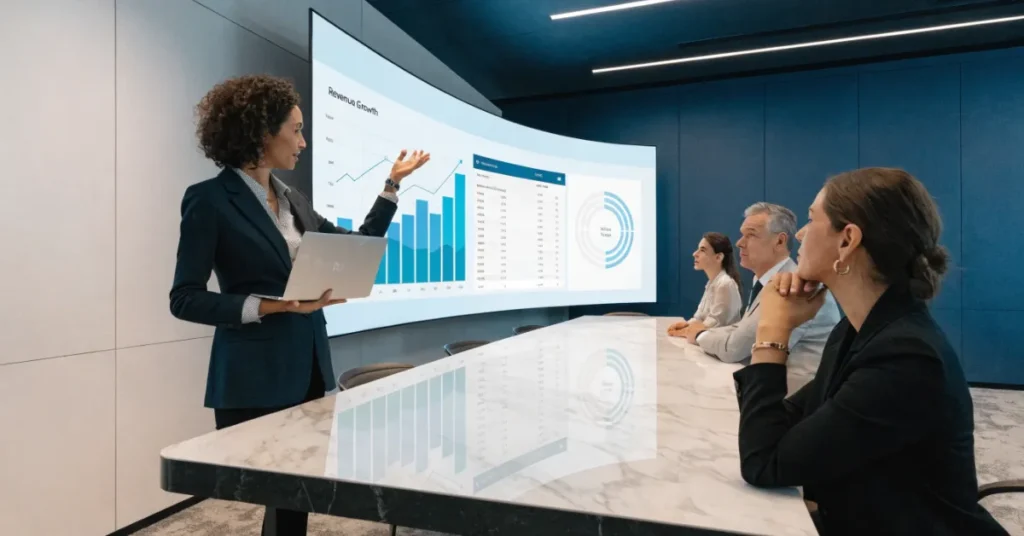
Choosing between traditional accounting and real-time accounting depends on your business needs. However, organizations operating in fast-changing markets generally benefit more from continuous financial visibility.
| Feature | Traditional Accounting | Real-Time Accounting |
|---|---|---|
| Financial Data | Updated periodically | Updated continuously |
| Reporting Speed | Monthly or quarterly | Instant reporting |
| Cash Flow Monitoring | Delayed | Live monitoring |
| Decision Making | Historical insights | Current financial insights |
| Accuracy | Depends on manual updates | Improved through automation |
| Collaboration | Limited | Multi-user cloud access |
| Automation | Basic | Advanced automation |
| Scalability | Less flexible | Highly scalable |
Traditional accounting may still work for very small businesses with limited transactions and simple reporting needs.
However, businesses experiencing growth, managing multiple departments, or handling large transaction volumes benefit significantly from real-time accounting because it offers:
As businesses continue to adopt digital technologies, real-time accounting has become an essential component of modern financial management rather than an optional upgrade.
Choosing the right accounting software is just as important as adopting real-time accounting. The ideal solution should automate routine tasks, provide accurate financial insights, and support informed decision making. Before investing in software, evaluate whether it offers the features your business needs today and can scale with future growth.
Interactive dashboards display key financial metrics in real time, including revenue, expenses, cash flow, and profit margins. These dashboards help business owners monitor performance and identify trends without generating multiple reports.
Automatic bank synchronization imports transactions directly into the accounting system. This reduces manual data entry, improves accuracy, and keeps financial records up to date.
Efficient invoicing tools help businesses create invoices, send payment reminders, monitor outstanding balances, and track customer payments from one platform.
Real-time expense tracking allows businesses to categorize spending, monitor departmental budgets, and identify unnecessary costs before they affect profitability.
Businesses that manage physical products benefit from inventory tracking, stock valuation, reorder alerts, and product profitability analysis.
Integrated payroll features simplify salary calculations, tax deductions, employee benefits, and payroll reporting while reducing administrative work.
Look for software that generates essential reports instantly, including:
Built-in tax tools help businesses calculate taxes accurately, maintain compliance, and prepare tax reports more efficiently.
Cloud-based software allows authorized employees, accountants, and business owners to collaborate securely using the same financial information.
Mobile applications allow users to approve invoices, monitor cash flow, review reports, and manage finances while working remotely.
Modern accounting software increasingly uses artificial intelligence to automate reconciliations, categorize transactions, identify unusual spending patterns, and improve reporting accuracy.
Strong security features such as encryption, user permissions, automatic backups, and multi-factor authentication help protect sensitive financial information.
Although the benefits are significant, implementing real-time accounting requires proper planning. Businesses may experience challenges during the transition, but most issues can be resolved with the right strategy.
Employees may need time to learn new accounting software and automated workflows.
Solution
Moving historical financial data from legacy systems can be time-consuming and requires careful planning.
Solution
Accounting software must work seamlessly with payroll, inventory, CRM, and banking systems.
Solution
Software subscriptions, implementation services, and employee training may require an upfront investment.
Solution
Employees may hesitate to adopt new technology or change established workflows.
Solution
By addressing these challenges proactively, businesses can transition smoothly and begin realizing the benefits of real-time accounting more quickly.
Implementing software is only the first step. Businesses achieve the greatest value when they follow consistent financial management practices.
Record transactions promptly to maintain accurate financial information and avoid reporting delays.
Use automation for recurring invoices, payroll, subscriptions, and supplier payments to improve efficiency.
Review bank accounts frequently to identify discrepancies and maintain accurate financial records.
Review key performance indicators regularly to identify opportunities and address potential issues early.
Monitor metrics such as:
These indicators provide valuable insights for better decision making.
Implement strong passwords, role-based user access, encryption, and multi-factor authentication to safeguard financial information.
Regular training helps employees use accounting software effectively and stay informed about new features and best practices.
Automatic cloud backups reduce the risk of data loss caused by hardware failures or cyber incidents.
Review financial performance monthly or quarterly to compare results with budgets and business goals.
Experienced accounting professionals can interpret financial reports, identify improvement opportunities, and provide strategic advice that supports business growth.
Managing your finances with real-time accounting becomes even more effective when supported by experienced accounting professionals. Ripple Accountants helps businesses streamline bookkeeping, maintain accurate financial records, improve compliance, and gain meaningful financial insights for better decision making. Whether you need ongoing accounting support, cloud accounting implementation, tax assistance, or financial advisory services, the experienced team can provide practical solutions tailored to your business needs.
To learn more, contact Ripple Accountants at +971 52 356 5409, email info@uaetaxcompliance.ae, or reach the team via WhatsApp at +971 4 250 0833 to discuss your accounting and business support requirements.
Real-time accounting is the process of recording and updating financial transactions as they occur. It provides businesses with continuous access to accurate financial information instead of relying on delayed reports.
It provides current financial data that helps business owners evaluate cash flow, monitor expenses, analyze profitability, and respond quickly to changing business conditions.
Yes. Small businesses benefit from improved financial visibility, automated bookkeeping, faster reporting, and better cash flow management without increasing administrative work.
Yes. Automation minimizes manual data entry, reduces duplicate transactions, improves reconciliation accuracy, and decreases reporting errors.
Many modern cloud accounting platforms provide real-time accounting capabilities, including automated reporting, bank integrations, expense tracking, invoicing, and financial dashboards.
Yes. Businesses can monitor incoming payments, outstanding invoices, supplier obligations, and available cash instantly, allowing for better financial planning.
Reputable cloud accounting providers use encryption, automatic backups, access controls, and multi-factor authentication to protect financial data.
Although reports are available in real time, reviewing key financial reports weekly or monthly helps businesses identify trends, evaluate performance, and support strategic planning.
Real-time accounting has transformed how businesses manage their finances and make strategic decisions. Instead of relying on outdated reports, organizations can access accurate financial information whenever they need it. This continuous visibility improves cash flow management, financial reporting, forecasting, expense control, compliance, and overall business performance.
Disclaimer: The information in this article is provided for general educational purposes only and should not be considered accounting, tax, or legal advice. Every business has unique financial circumstances, so consult a qualified accounting professional before making financial or business decisions.
Tell us a little about your business and our UAE tax experts will get back to you with clear, practical answers — no obligation.
 Corporate Tax
How much does a UAE Tax Residency Certificate cost, how long does it take to obtain, and when does it expire? Understanding…
Read article Corporate Tax
Are you planning to apply for a UAE Tax Residency Certificate but unsure which documents you need or whether you qualify? Understanding…
Read article Corporate Tax
Do you need a UAE Tax Residency Certificate for a local administrative requirement or to claim benefits under a double taxation agreement?…
Read articlePage 1 of 58
Book a free consultation and get clear answers for your business.
0 Comments